Think Your Equipment Is Fine Just Because It Hasn’t Failed? These Operational Details Could Be Hurting Your ESG Performance.
When it comes to ESG in manufacturing, many companies immediately think of carbon emissions inventories, renewable energy procurement, Energy Management Systems (EMS), and ways to reduce energy consumption across their factories.
These are, of course, important. But if we shift our focus back to the manufacturing floor, there is another issue that occurs every day yet is often overlooked:
If equipment is not operating at peak efficiency, how can we be sure that every kilowatt-hour of electricity is being used effectively?
A motor, pump, fan, or air compressor will typically continue operating as long as it is still running.
However, being operational does not necessarily mean the equipment is operating normally, and the absence of downtime does not mean there is no waste.
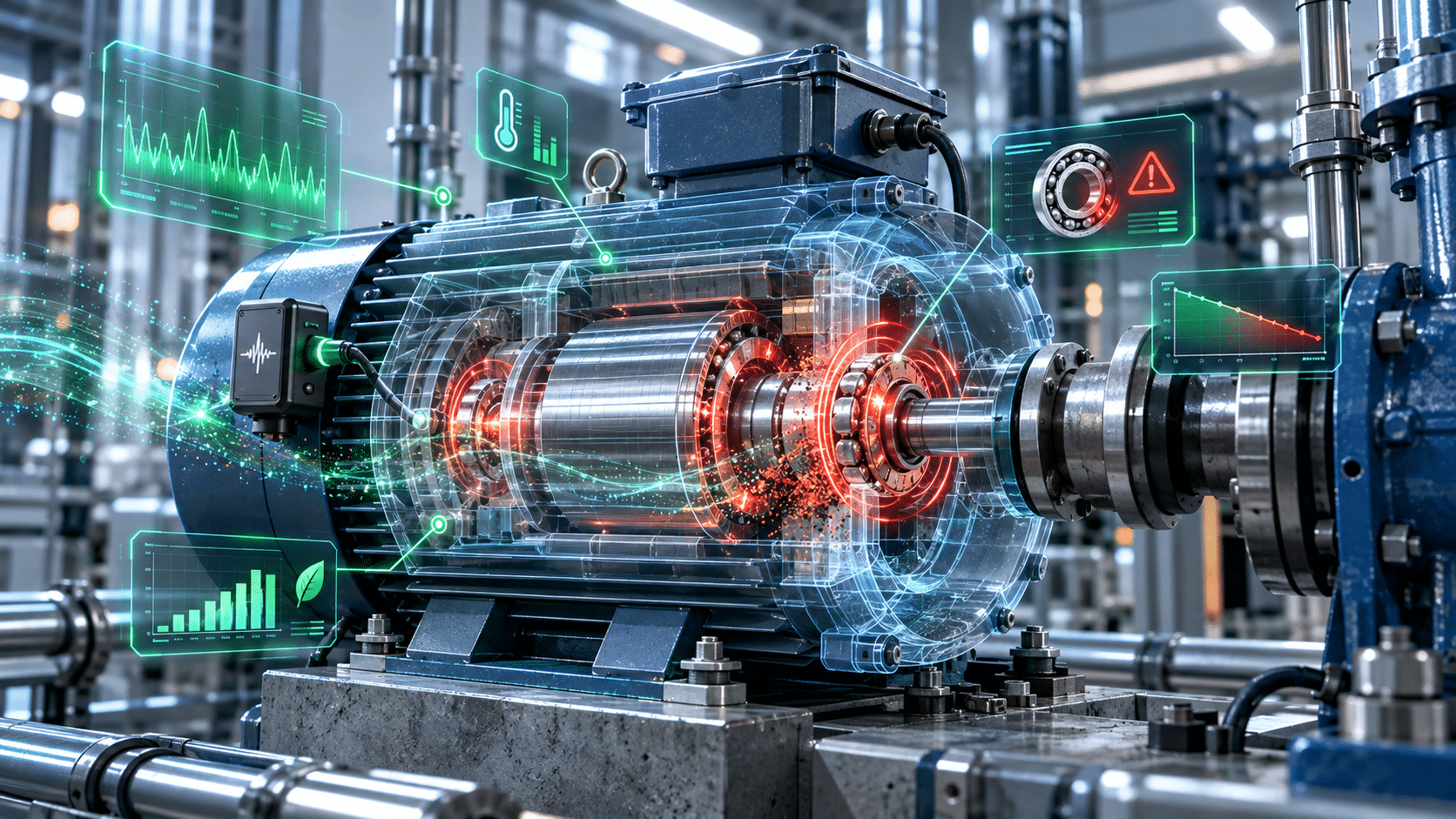
Issues such as bearing wear, rotor imbalance, shaft misalignment, gear abnormalities, and mechanical looseness can gradually develop long before an actual equipment failure occurs.
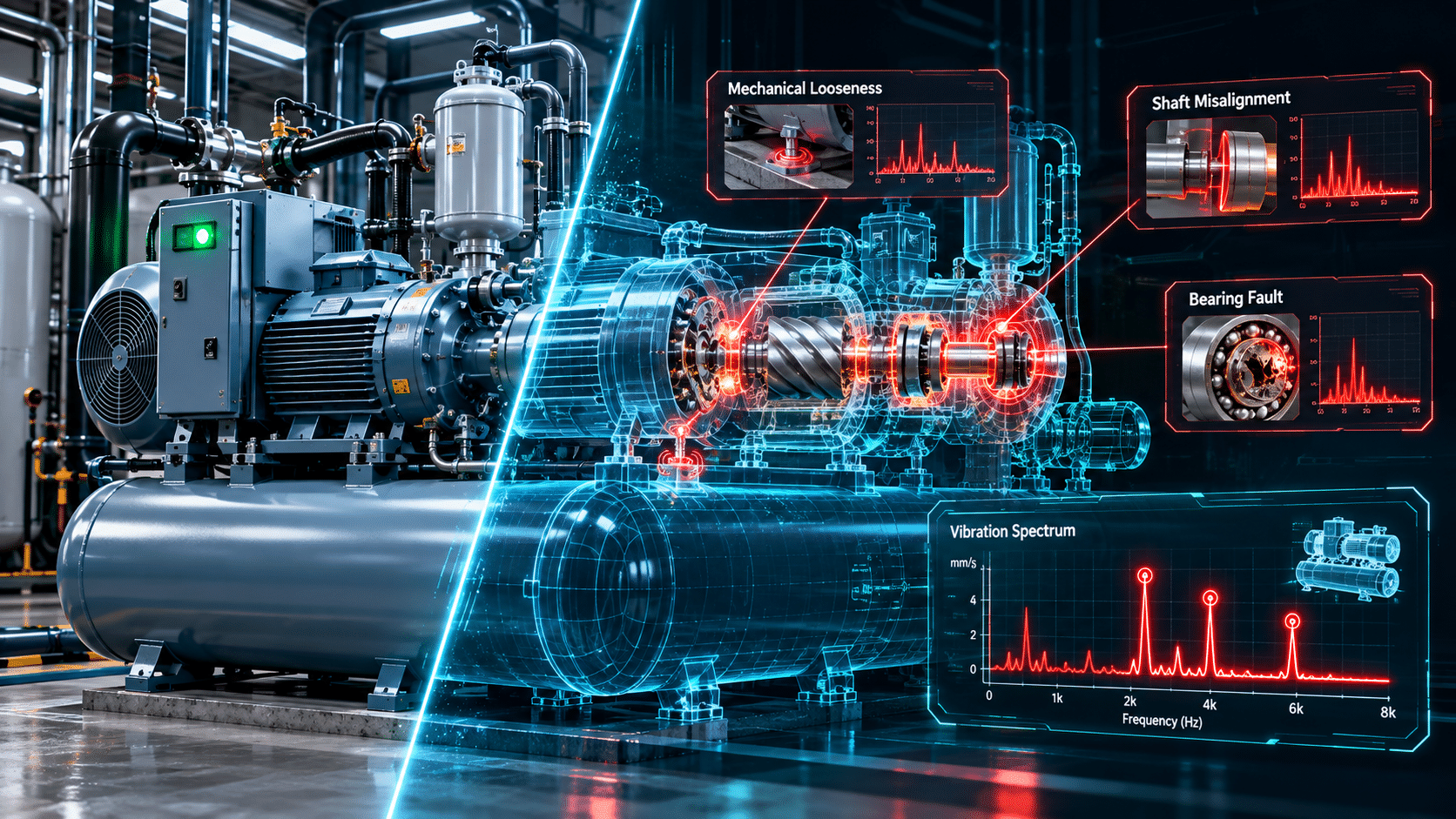
For the manufacturing floor, this may seem like an anomaly that can simply be “monitored for now.”
But for the business, it could mean:
Equipment Degradation → Increased Maintenance Risk → Unplanned Downtime → Production Losses → Additional Energy and Resource Consumption
Therefore, when manufacturers think about ESG, they should ask more than just:
“How much energy are we using?”
It is also worth asking one step further:
“Are our equipment using this energy in a healthy and stable operating state?”
This is precisely where PHM (Prognostics and Health Management) begins to intersect with ESG.
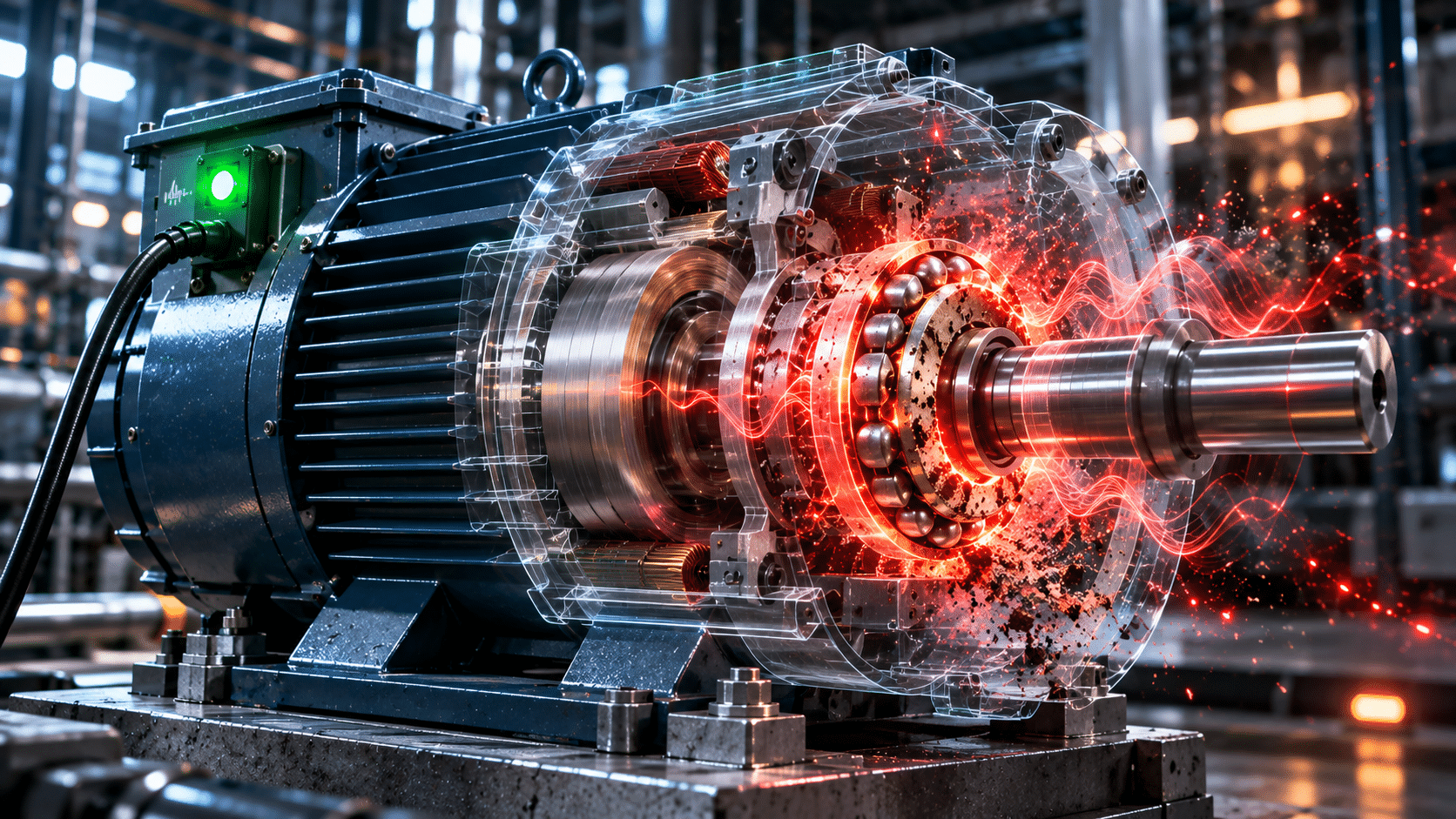
Equipment being “operational” does not necessarily mean it is “operating normally.”
In manufacturing environments, equipment maintenance often faces two common scenarios.
The first is:
The equipment fails, then it gets repaired.
The second is:
Perform routine maintenance at fixed intervals.
The former is more likely to result in unexpected failures and unplanned downtime. The latter can reduce some failure risks, but it may also lead to situations where components are replaced simply because the scheduled maintenance interval has been reached, even though the equipment does not actually need them to be replaced.
What truly deserves attention is often the change in equipment condition between these two approaches.
The equipment may still be operating normally and producing as expected, while a component inside has already begun to deteriorate.
For example:
- The bearing begins to wear.
- The rotor gradually becomes unbalanced
- The shaft becomes misaligned.
These anomalies may not cause the equipment to stop immediately.
But they may be telling us:
This equipment is no longer operating as healthily as it once did.
Therefore, effective equipment management requires more than simply knowing whether a machine has failed. It requires understanding:
- What is the equipment’s current health status?
- Is the anomaly continuing to develop?
- Which equipment requires priority attention?
- When is the optimal time to intervene with maintenance?
This is also where PHM differs from traditional maintenance approaches.
Moving from “fixing equipment after it fails” to “making maintenance decisions based on equipment condition.”
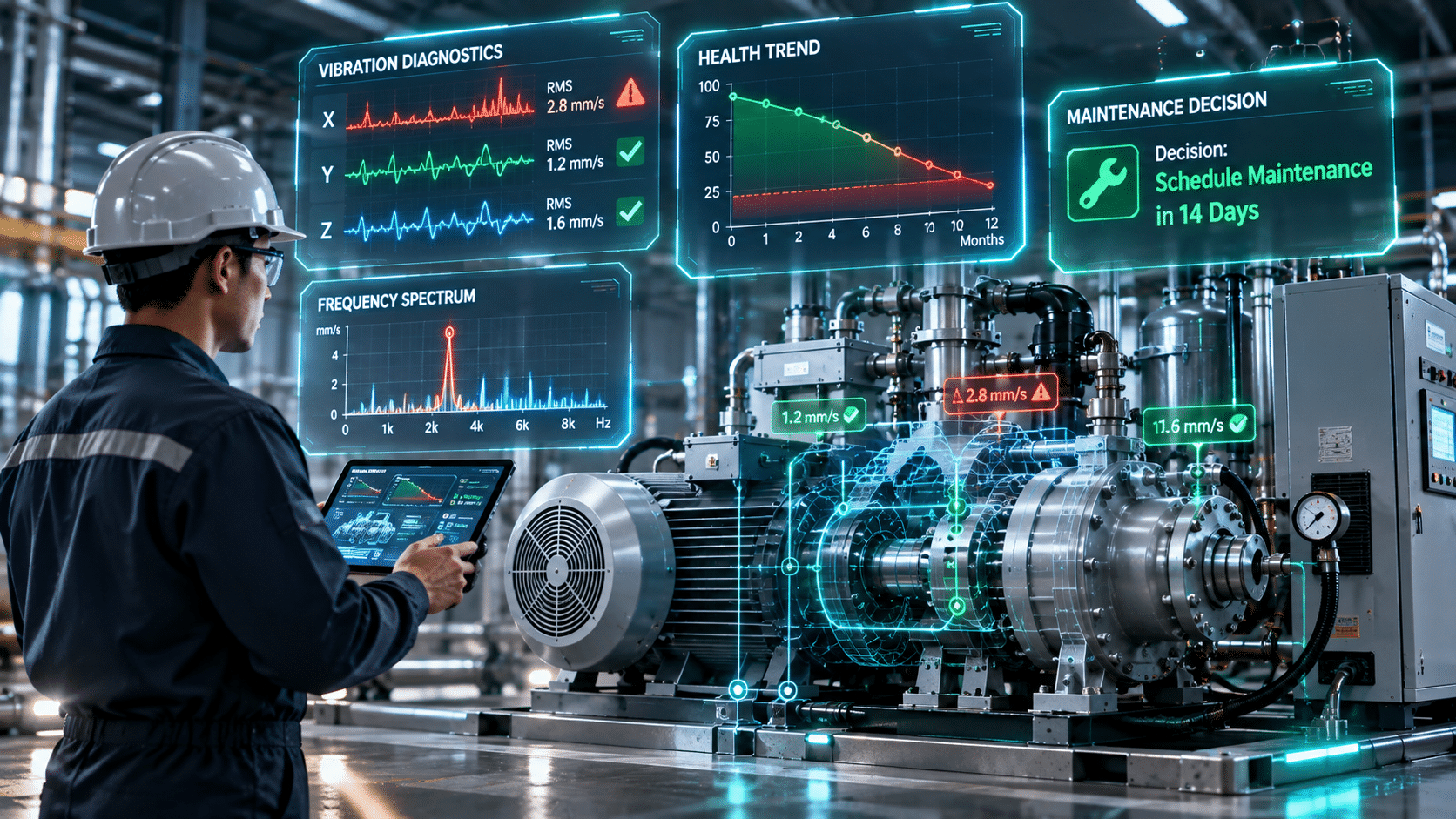
Why Do Equipment Anomalies Deserve a Place in the ESG Discussion?
First, let’s clarify one important point:
Not every equipment failure directly results in additional carbon emissions.
What truly deserves enterprises’ attention is how equipment anomalies may affect energy use, production efficiency, material consumption, and maintenance resources.
For example, when a rotating machine develops a mechanical anomaly, it may continue operating for some time. If the anomaly affects equipment efficiency, the business may need to consume more energy to maintain the same level of production.
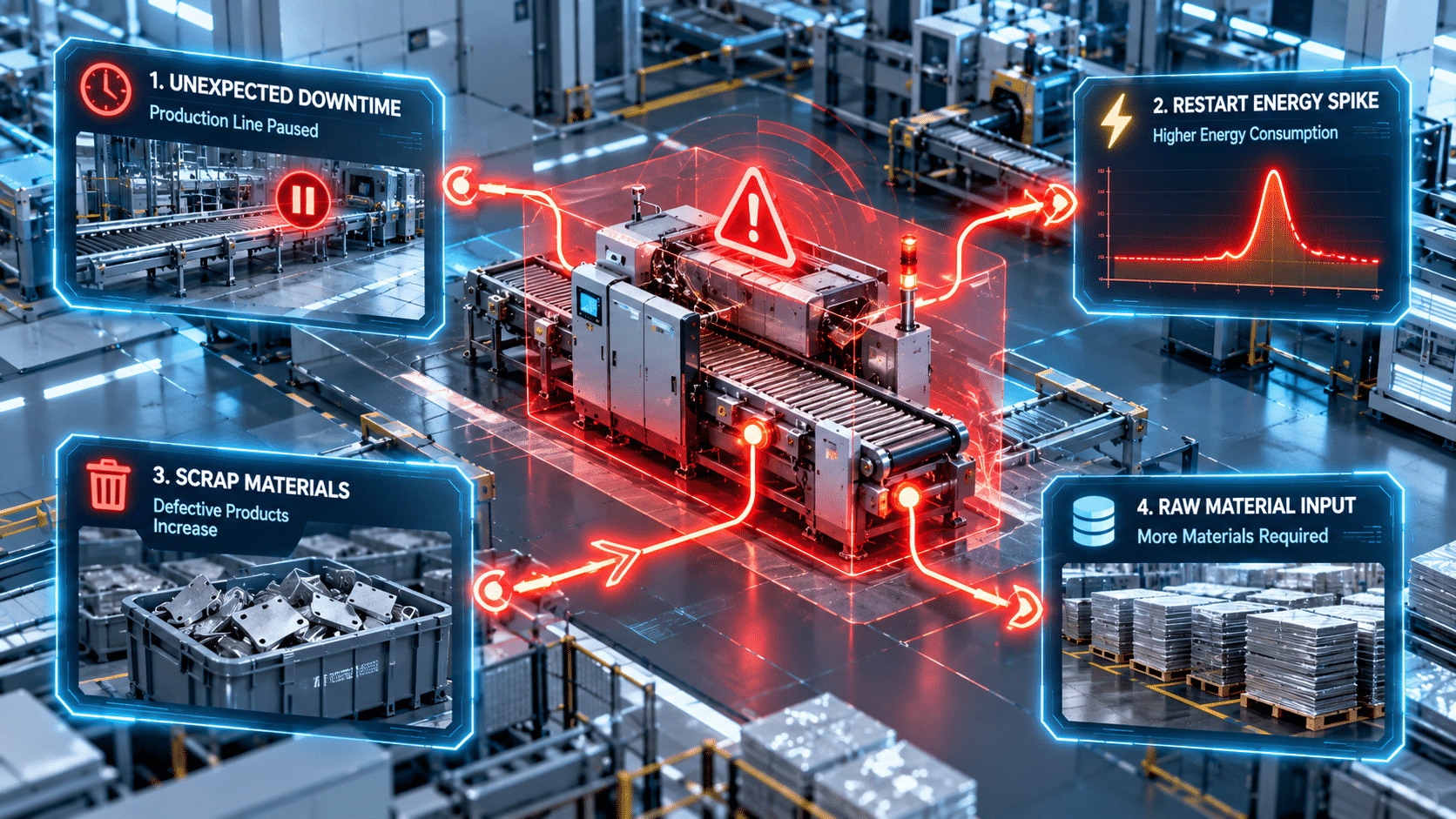
On the other hand, if the equipment eventually experiences unplanned downtime, it may trigger another chain of resource consumption:
Equipment Failure
→ Production Disruption
→ Equipment Restart
→ Rework or Product Scrap
→ Additional Material and Energy Consumption
These are all factors worth considering when evaluating energy efficiency and sustainable manufacturing.
Recent research has also begun to quantify the relationship between equipment maintenance, energy use, and carbon intensity. A 2026 study published in *Computers & Industrial Engineering* examined energy-aware predictive maintenance through a sheet-metal manufacturing case study. The study found that unplanned downtime can result in non-productive energy waste and linked maintenance improvements to per-unit carbon intensity. In the case study, the proposed framework reduced repair time by 64.2% and per-unit carbon intensity by 8.29%. However, these results are specific to the case studied and should not be interpreted to mean that every factory implementing PHM will achieve the same level of improvement.
Therefore, a more precise way to put it is not:
“Equipment failures inevitably increase carbon emissions.”
Rather:
“Equipment anomalies and unplanned downtime can lead to additional energy and resource consumption. Therefore, equipment health management can serve as an entry point for manufacturers looking to improve equipment efficiency and advance sustainable operations.”
This way of thinking also brings ESG beyond company-level carbon emissions figures and into the realities of the manufacturing floor.
PHM Is More Than Just “Predicting Whether Equipment Will Fail”
The value of PHM goes beyond predicting when equipment will fail.
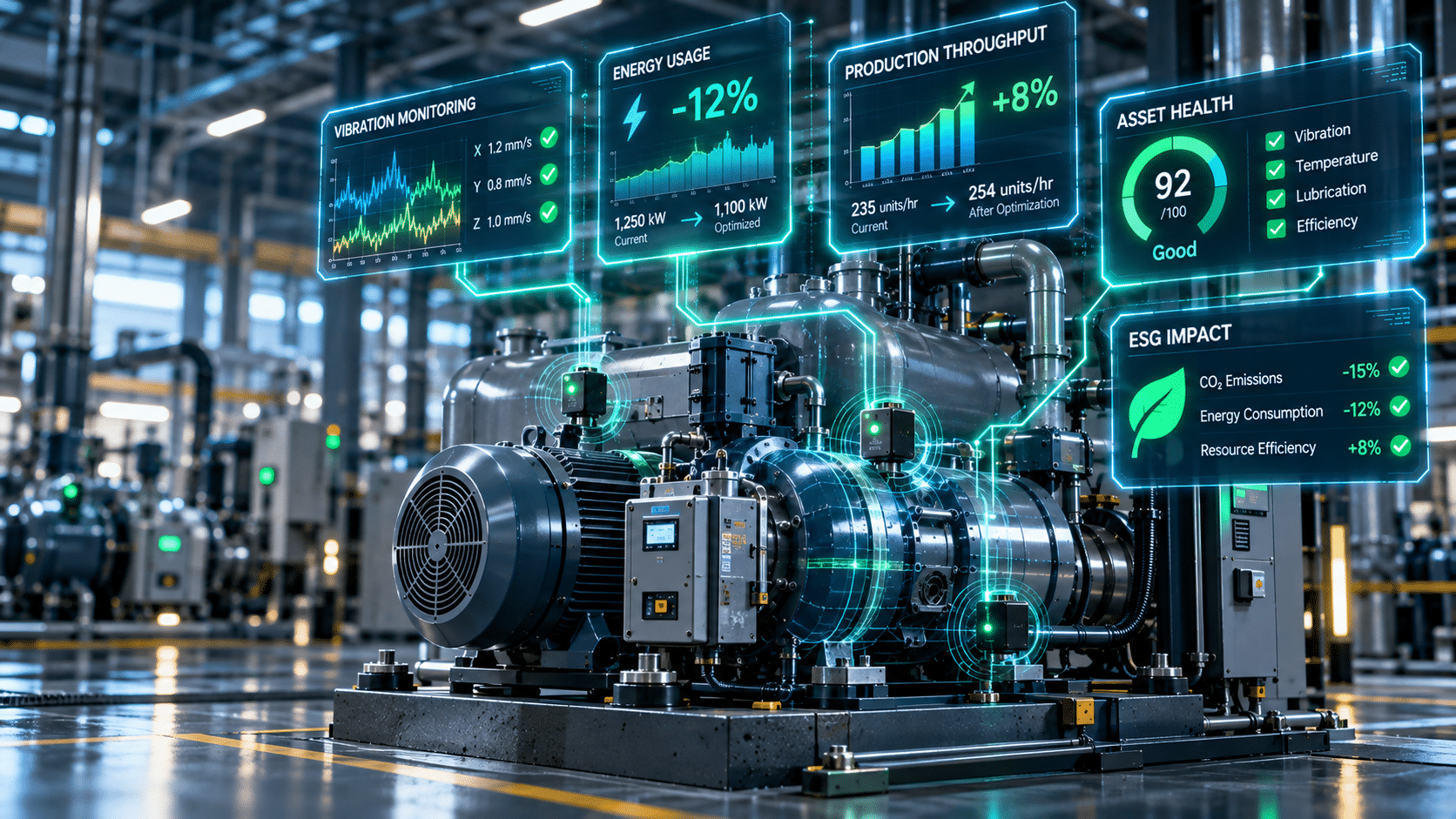
At its core, PHM uses equipment condition monitoring, anomaly diagnosis, and predictive analytics to continuously assess equipment health and provide data-driven insights for maintenance decisions.
Take vibration monitoring as an example.
Rotating equipment typically exhibits relatively stable vibration characteristics during normal operation.
When bearings, gears, rotors, or other mechanical components develop abnormalities, the vibration signals may also change.
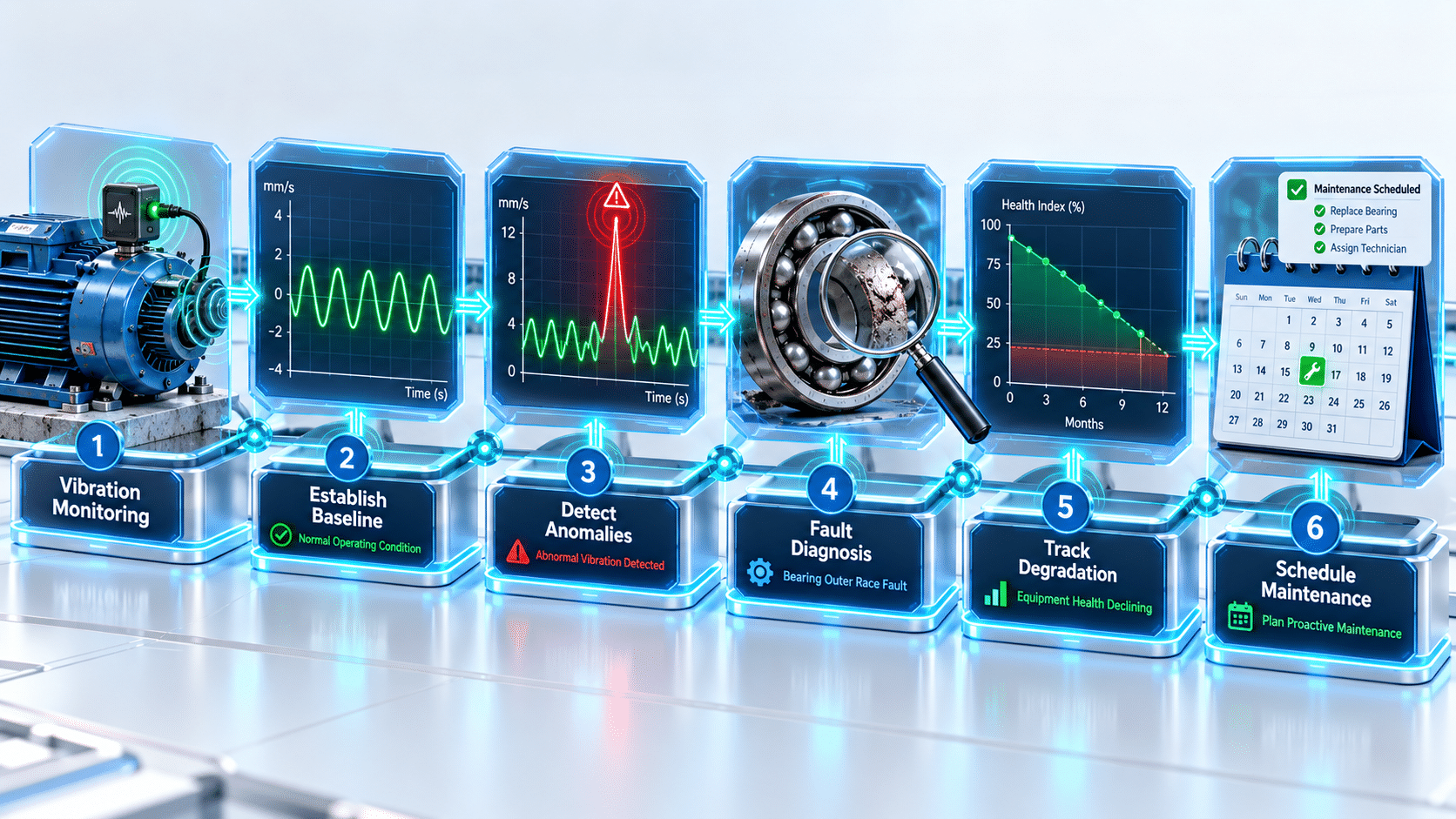
Therefore, companies can establish an equipment health management process. What this process truly changes is not just maintenance timing.
More importantly:
Maintenance personnel no longer have to wait for equipment problems to occur. Instead, they can identify potential issues earlier as equipment conditions begin to change.
From “Preventing Failures” to “Preventing Equipment from Remaining in an Abnormal Condition for Extended Periods”
This is also a key point where PHM connects with ESG.
Consider a common scenario on the manufacturing floor:
The equipment develops a minor anomaly.
After noticing it, the on-site personnel might say:
“It’s still running for now, so let’s keep an eye on it.”
That response is entirely understandable.
Because shutting down the equipment immediately means interrupting production and could also affect delivery schedules.
The problem is that if the equipment is actually deteriorating, “let it run for now” can turn into weeks or even months—until one day, the equipment suddenly fails.
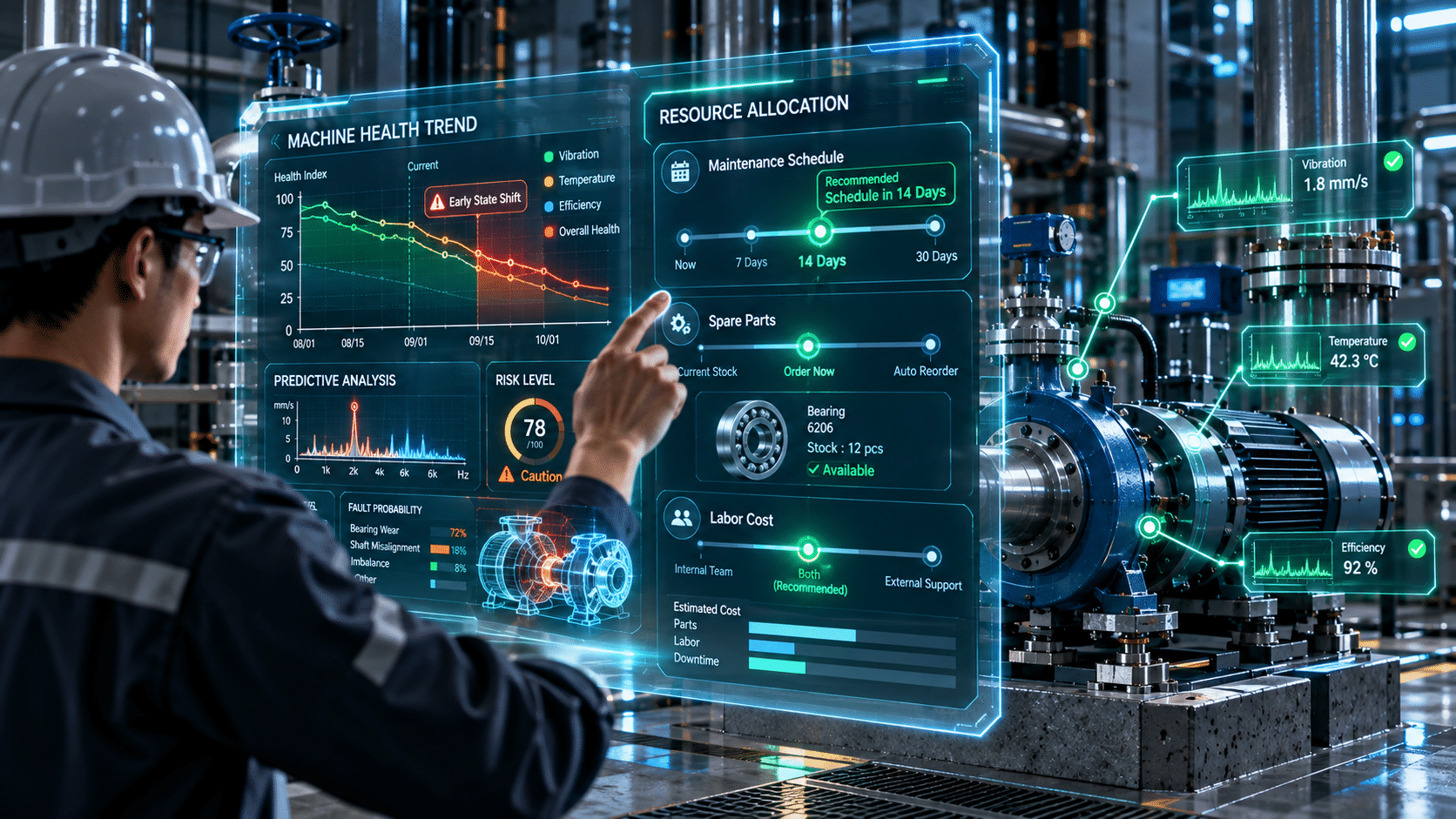
With continuous visibility into equipment condition, maintenance no longer has to be a choice between “fix it now” and “fix it after it fails.” Instead, maintenance teams can identify a more appropriate intervention point based on the equipment’s actual condition.
This approach is also increasingly aligned with the direction of modern asset management.
ISO 55001:2024 emphasizes that managing corporate assets requires more than just keeping equipment operational. It also necessitates considering risk, cost, performance, and the overall value of assets throughout their lifecycle.
Simply put, it is:
It’s not about waiting until a problem appears to take action, but knowing earlier what changes are happening with the equipment, then deciding when to respond and how many resources to allocate.
And this is precisely one of the values that PHM can provide.
PHM × ESG: The real value lies in connecting different data points.
If PHM and ESG are viewed together, it becomes clear that the two are not a matter of “one system replacing another.”
A more reasonable relationship is:
PHM Equipment Visibility: Gain insight into equipment health, anomalies, and degradation status.
↓
EMS sees energy: Monitor electricity and energy usage.
↓
MES sees production: Keep track of output, processes, and production status.
↓
ESG management provides visibility into corporate sustainability performance: further organizing information on energy, carbon emissions, and resource use.
Only when these data start to connect can enterprises begin to answer questions that were once very difficult to answer:
When the equipment malfunctions, does energy consumption change?
After the maintenance was completed, did the equipment's operating condition improve?
Which critical equipment is worth prioritizing maintenance resources for?
Therefore, PHM is not a tool that directly calculates carbon emissions.
More precisely:
PHM is a critical data capability that connects “equipment condition” with “energy, production, and asset management.”
This is also its true value in ESG issues.
From Equipment Health to Smart Asset Management
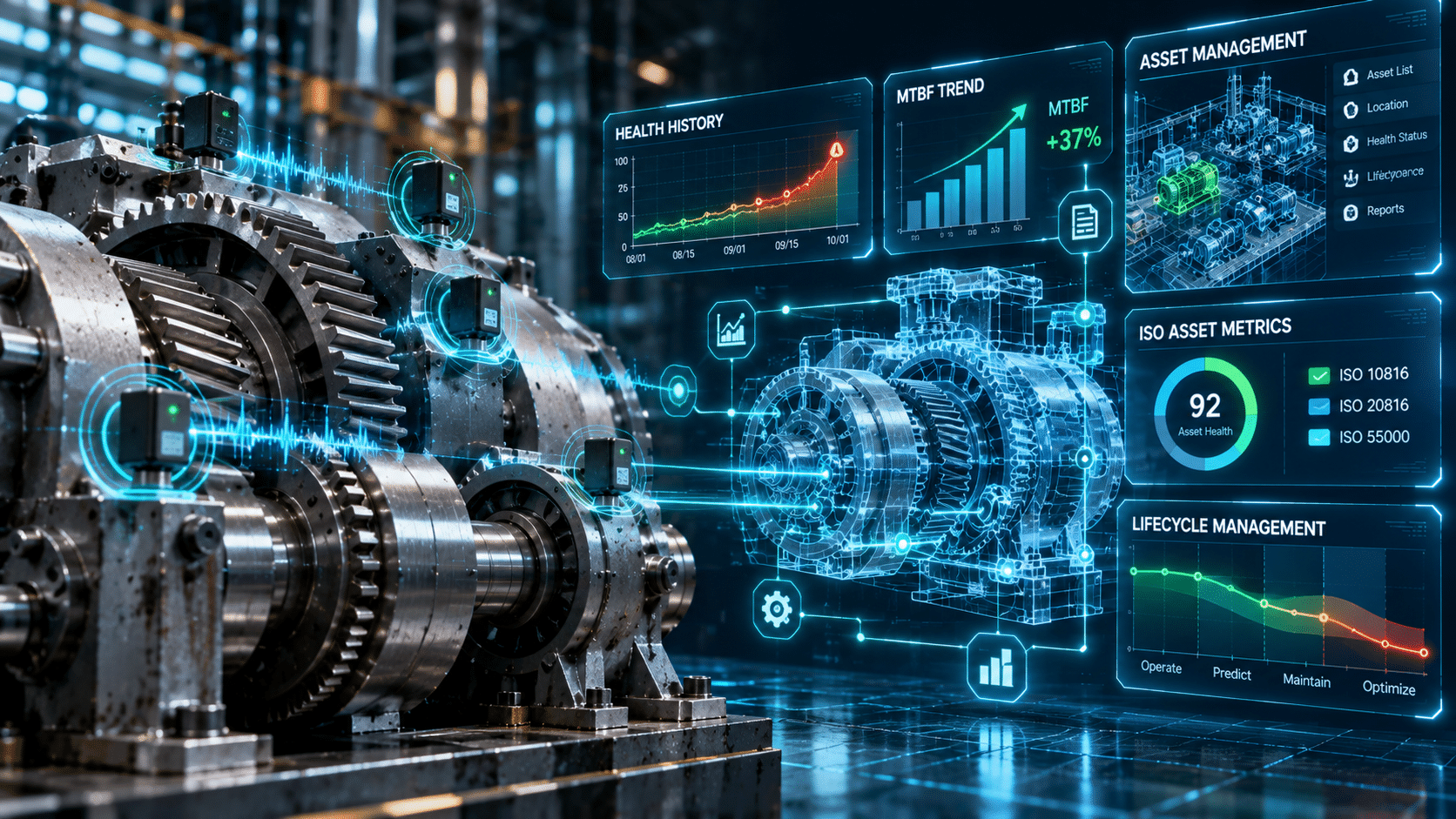
As enterprises continue to accumulate equipment data, the value of PHM can also gradually extend from “single-event failure warnings” to longer-term asset management.
For example, create:
- Equipment Health History
- Failure mode
- Frequency of abnormalities
- Maintenance records…etc.
The value of this data lies not only in knowing “which piece of equipment broke”.
More importantly, help businesses gradually answer:
- Which equipment is most worth investing in?
- Which equipment needs the most attention?
- Which equipment maintenance strategies need to be adjusted?
- When should it be repaired? When should it be replaced?
This is highly relevant to the asset decision-making, data and information, and lifecycle management emphasized in ISO 55001:2024. The 2024 edition also adds related content such as “Asset Management Decision-Making and Value” and “Data and Information,” emphasizing the use of data to support asset decision-making and value realization.
In other words:
The endpoint of PHM is not necessarily just predicting failures.
The longer-term value is to gradually transform the equipment from “a machine” into a “digital asset” that the enterprise can continuously understand, manage, and make decisions about.
How can the manufacturing industry begin implementing PHM × ESG?
When many companies see the integration of PHM and ESG, their first thought may be:
“Do we need to connect all the equipment in the entire plant?”
Actually, not necessarily.
For most manufacturing companies, the more pragmatic approach is instead:
Start with critical equipment that has a greater impact on production, energy, or maintenance, and establish a baseline for normal operation. Then, through condition data such as vibration, temperature, and rotational speed, continuously track how the equipment changes from normal operation to deviation, abnormality, and deterioration. When monitoring is further integrated with fault diagnosis, equipment data can truly be transformed into actionable information for maintenance personnel.
More importantly, as equipment health data is gradually integrated with energy use, equipment load, and production volume, enterprises can further observe the relationships between equipment condition, energy efficiency, and production performance. Finally, by continuously tracking indicators such as MTBF, MTTR, unplanned downtime, OEE, and energy use per unit of output, enterprises can establish verifiable data relationships among equipment, production, energy, and sustainability management.
It’s not about putting all the data together, but about letting data truly help businesses make better decisions.
The next step for ESG may be moving from “calculating carbon” to “understanding equipment”
Carbon accounting can tell companies: How much have we emitted?
Energy management can tell businesses: How much energy have we used?
Production management can tell a company: How much have we produced?
And PHM can address another very important question: What state is the equipment actually in right now?
Only when this information is gradually connected can enterprises have the opportunity to trace back from results to causes.
ESG isn’t just about looking at the final carbon emissions figures; you can also trace them all the way back to energy, production, and even the health of the equipment itself. When companies connect these data points, they can gain a clearer understanding of what is happening behind their sustainability indicators.
This also aligns with the data and decision-making mindset emphasized by ISO 55001:2024: asset management is not just about maintaining equipment, but about making better decisions among cost, risk, and performance through more complete information.
Sustainability in manufacturing doesn’t just happen in reports.
ESG easily brings to mind the carbon emissions figures, annual targets, and sustainability metrics found in corporate reports.
But for the manufacturing industry, what truly affects these numbers is often the equipment operating every day inside the factory.
A piece of equipment consumes some extra energy today, an unexpected failure causes a shutdown, a batch of products requires rework due to equipment abnormalities——these seemingly scattered small incidents, when accumulated over time, become part of a company’s operational efficiency and resource utilization.
So, for manufacturers, advancing ESG can involve not only managing carbon emissions from the top down, but also rethinking every piece of equipment from the bottom up.
Equipment health is not the whole of ESG.
But it can become an important part of helping enterprises understand energy efficiency, reduce unplanned downtime, improve maintenance decisions, and build smart asset management capabilities.
The true value that PHM brings is not simply telling enterprises:
“This equipment is about to break down.”
Instead, it gives businesses the opportunity to know earlier:
“What changes are happening to this equipment?”
As equipment health data becomes increasingly integrated with energy, production, and asset management data, enterprises can move beyond simply “knowing how much energy they use” toward:
"Understand why energy is being used and which equipment is worth prioritizing for improvement."