
Why BLE Dominates Wireless Vibration Sensors: A Technical Comparison with Wi-Fi and LoRa
Vibration monitoring does not demand massive broadband transmission speeds. Instead, it requires ultra-low power consumption, signal stability, and multi-year uninterrupted operation. This makes Bluetooth Low Energy (BLE) the leading wireless communication standard for industrial vibration telemetry.

Why Selecting the Right Wireless Protocol Matters
In wireless sensor deployments, your choice of communication technology directly dictates:
-
- Battery Longevity: Dictates field maintenance schedules and battery replacement cycles.
- Deployment TCO: Governs gateway density, cabling overhead, and installation costs.
- Transmission Stability & Latency: Ensures dependable telemetry arrival without packet loss.
- Environmental Suitability: Determines performance inside dense, metallic plant environments vs. wide outdoor sites.
In fleet-wide sensor deployments, choosing an ill-fitted wireless protocol results in premature battery exhaustion, skyrocketing maintenance costs, and compromised system reliability.
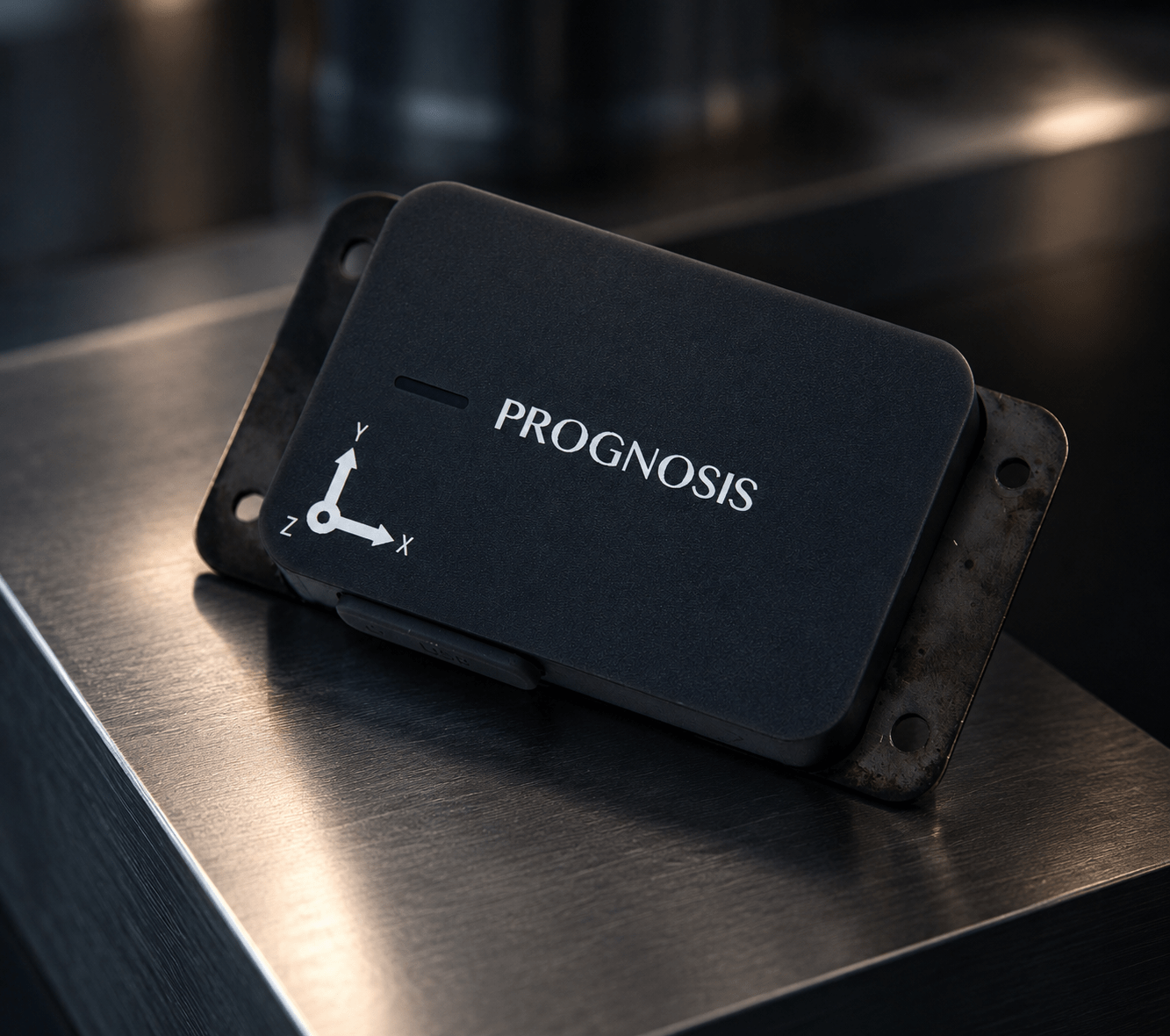
Protocol Overview: BLE vs. Wi-Fi vs. LoRa
While BLE, Wi-Fi, and LoRa can all serve as communication protocols for wireless sensors, each was engineered for a fundamentally different operational purpose.
BLE emphasizes low power consumption and short-range transmission, making it ideal for battery-powered sensors operating over extended periods. Wi-Fi offers higher throughput and native network connectivity, but carries relatively high power consumption. LoRa excels in long-range, low-power communication, making it best suited for transmitting small data payloads across wide geographical areas.

Unique Telemetry Requirements of Industrial Vibration Sensors
Unlike simple temperature or humidity sensors that report single numeric values every few minutes, industrial vibration sensors have distinct technical demands:
-
- Continuous 24/7 Deployment
- Structured Data Payloads
- Fleet-Scale Density
- Indoor Industrial Environment
For industrial vibration telemetry, power efficiency and operational stability consistently trump raw transmission speed.
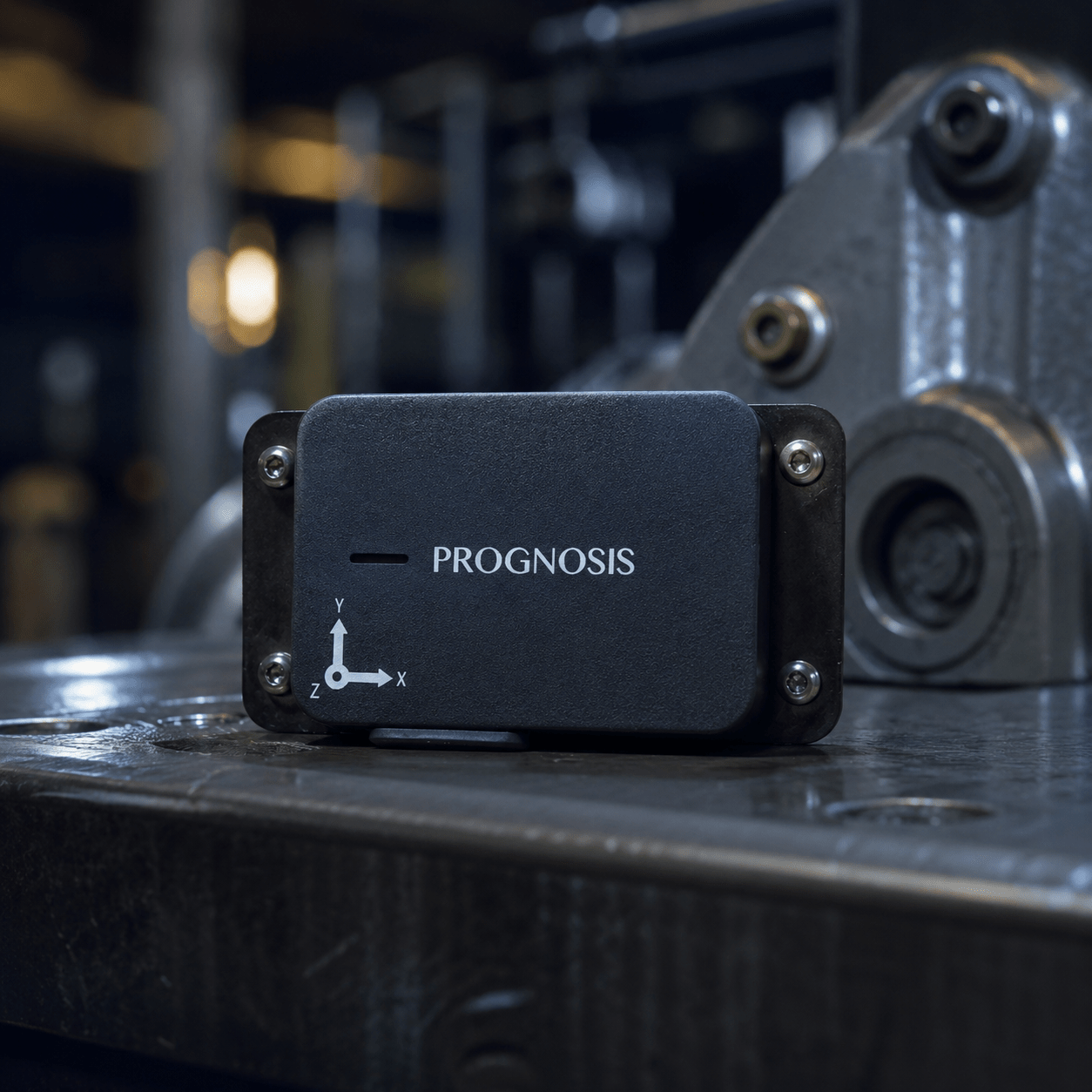
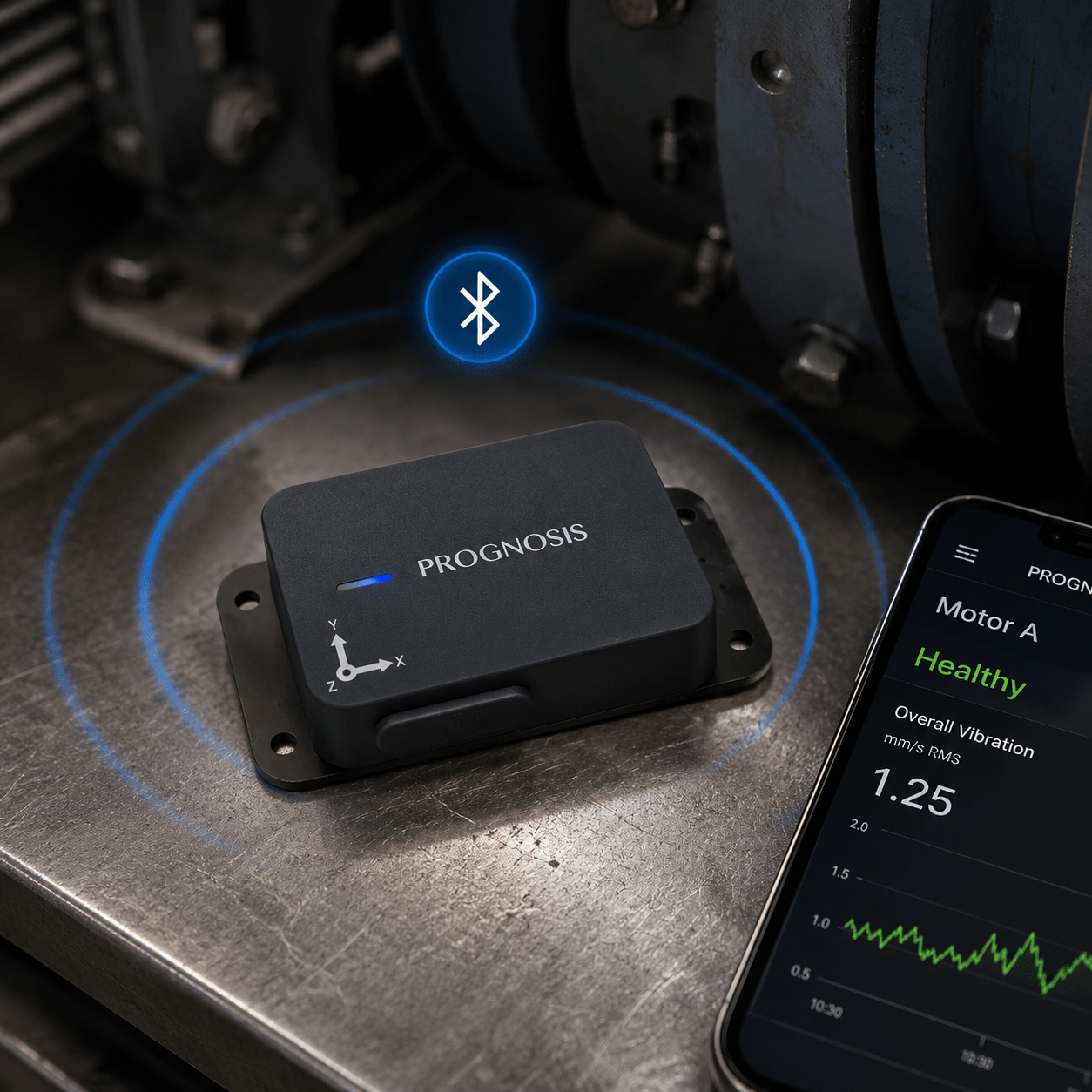
Why BLE Is Uniquely Suited for Wireless Vibration Telemetry
The goal of wireless vibration monitoring is to establish a low-maintenance, multi-year asset health pipeline. BLE balances power draw, data capacity, and deployment simplicity:
Compared to higher-power wireless protocols, BLE combines low power consumption, stable transmission, and effortless gateway integration—making it particularly well-suited for industrial wireless vibration monitoring.
This advantage becomes critical when facilities deploy sensors at scale across assets like motors, pumps, fans, and compressors. In these high-density deployments, sensors typically rely on long-term battery power. Ultra-low power consumption not only extends battery longevity, but also directly reduces downstream maintenance frequency and overall total cost of ownership (TCO).
Ultra-Low Power Draw for Long-Term Monitoring
Because vibration sensors must capture machinery signals continuously or periodically over extended operational lifespans, power efficiency is paramount. BLE's low-power architecture drastically reduces communication energy draw, enabling battery-powered sensors to operate over long lifetimes while minimizing the overhead of frequent battery replacements.
Gateway-Centric Fleet Architecture
BLE sensors transmit telemetry centrally to local gateways, which aggregate data across multiple assets before forwarding it to backend platforms for analysis and diagnostics. This topology is ideal for high-density, multi-point plant environments, eliminating the network complexity of requiring every individual sensor to maintain a direct IP connection.
Purpose-Built Payload Capacity
The core objective of vibration monitoring is extracting key feature metrics and spectral insights that reflect asset health—not streaming bandwidth-heavy data like continuous video. Under a well-engineered sampling architecture, BLE easily fulfills condition monitoring requirements while preserving battery life and deployment simplicity.
BLE’s true advantage extends beyond simple "power savings"—it strikes the optimal balance between low power consumption, data capacity, and deployment simplicity, making wireless vibration sensors ideal for long-term, fleet-wide industrial rollouts.
Wi-Fi: High Speed, But Why Is It Often Impractical?
Wi-Fi provides gigabit bandwidth and direct local network integration—making it ideal for continuous raw waveform streaming, video surveillance, or high-frequency acoustic analysis.
The Trade-Off: Wi-Fi’s continuous transceiver power draw rapidly drains battery reserves. For battery-powered sensor fleets, Wi-Fi dramatically increases maintenance frequency and Total Cost of Ownership (TCO).
Best Used For: Mains-powered machinery requiring continuous, high-bandwidth raw waveform streaming.
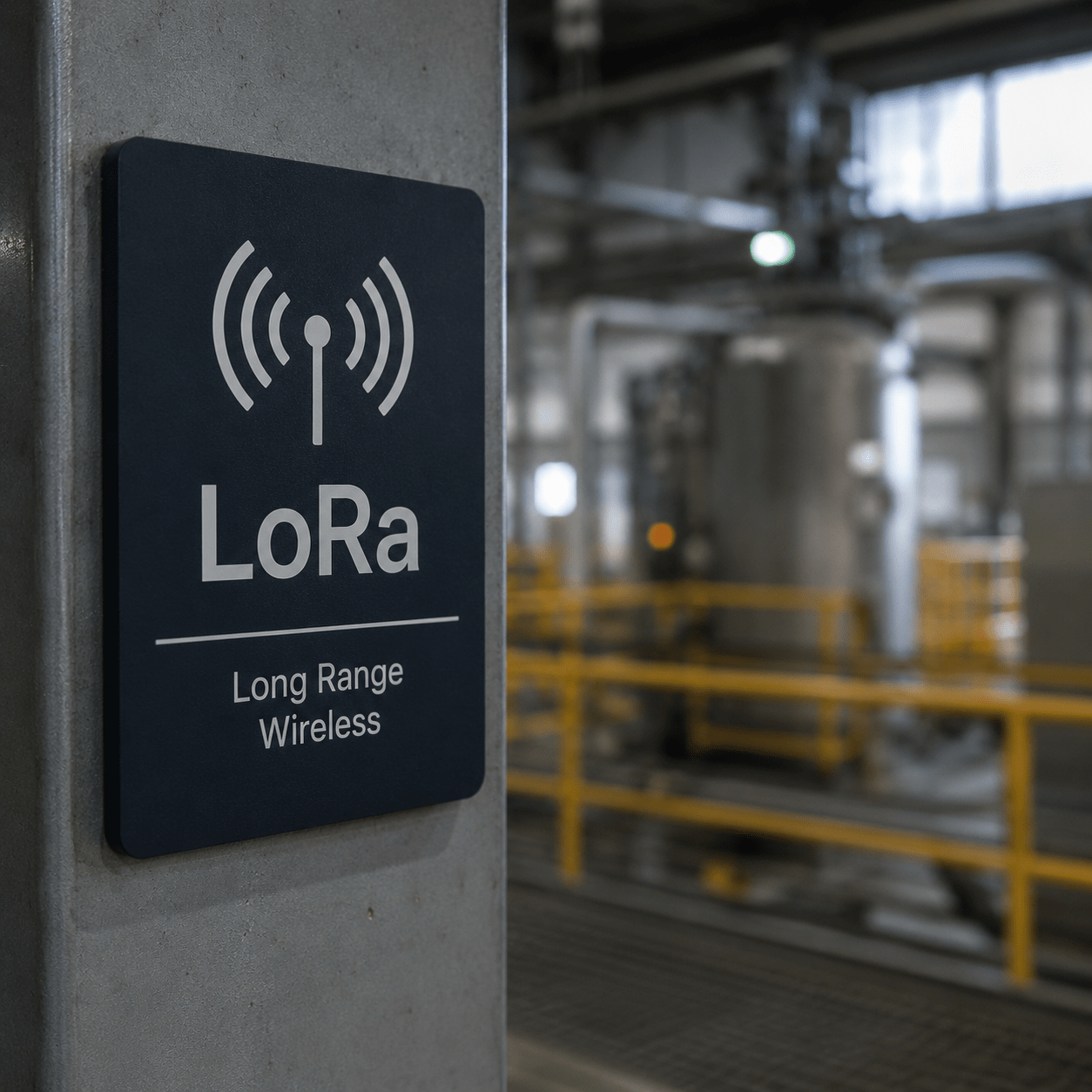
LoRa: Multi-Kilometer Range, But What Are the Limitations?
LoRa excels at transmitting tiny data packets over several kilometers, making it ideal for smart agriculture, outdoor utilities, and remote pipeline monitoring.
The Trade-Off: LoRa suffers from very low data rates, high latency, and strict duty-cycle regulations. Attempting to transmit high-resolution FFT spectra or multi-axis feature sets over LoRa quickly saturates network bandwidth and exhausts channel capacity.
Best Used For: Remote, widely dispersed outdoor assets where cabling or gateways are non-viable and only minimal data bytes are transmitted infrequently.
BLE, Wi-Fi, or LoRa: Which Protocol Fits Your Vibration Sensors?
When evaluating wireless communication protocols for vibration monitoring, the goal isn't simply choosing "the fastest speed" or "the longest range." The true metric is whether the system can reliably harvest equipment vibration telemetry over extended operational lifespans.
Industrial sensors are typically mounted directly to rotating machinery—such as motors, pumps, and fans—for continuous condition monitoring. Beyond raw transmission capability, decision-makers must account for battery lifespan, sensor node density, site environment, and ongoing maintenance overhead.
Ultimately, selecting a wireless protocol is an exercise in balancing transmission performance with real-world field deployment constraints.
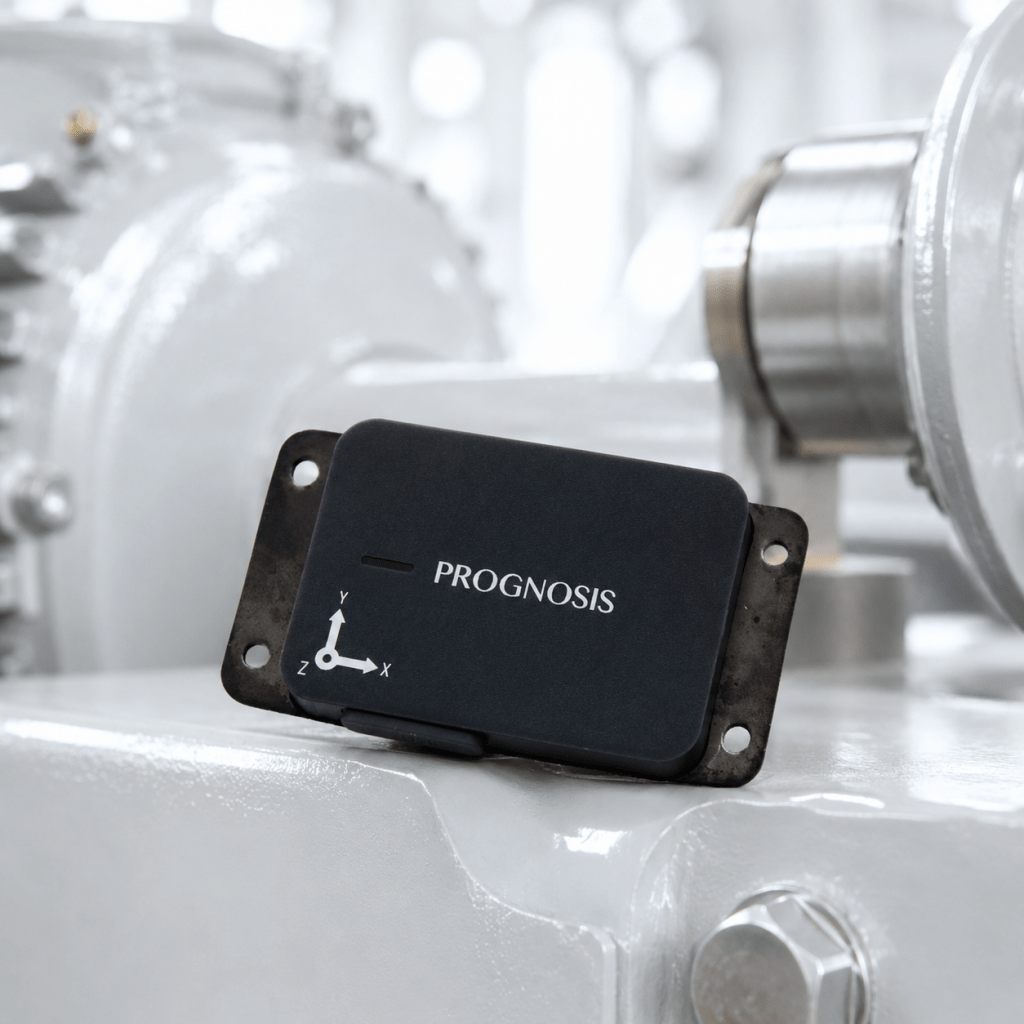
BLE vs. Wi-Fi vs. LoRa for Vibration Sensors
In vibration monitoring applications, selecting a wireless protocol requires balancing four critical factors: power consumption, data payload size, transmission range, and the physical deployment environment.
BLE: Delivers ultra-low power consumption, high indoor deployment flexibility, and optimal bandwidth for periodic telemetry payloads. Managed centrally via local gateways, BLE is uniquely tailored for 24/7 vibration monitoring on rotating assets such as motors, pumps, and machinery.
Wi-Fi: Offers high-speed throughput and native IP connectivity, but carries high power consumption. For applications that primarily transmit low-frequency vibration feature metrics or status alerts, Wi-Fi's energy draw is largely inefficient.
LoRa: Features multi-kilometer long-range transmission and low power consumption—making it ideal for outdoor or widely dispersed assets. However, severe bandwidth and data rate constraints make LoRa unsuitable for high-frequency spectral data or real-time vibration streaming.
When monitoring indoor factory assets, BLE provides the ultimate sweet spot across power efficiency, diagnostic capacity, and low total cost of ownership (TCO).