
Industrial Equipment Vibration Monitoring:
Which Technology Fits Your Application?
In rotating machinery—such as motors, pumps, fans, compressors, and gearboxes—vibration signatures serve as the definitive indicator of operational health.
As industrial enterprises evolve from rigid, calendar-based walkthroughs to continuous Condition-Based Monitoring (CBM) and Predictive Maintenance (PdM), selecting the right vibration sensor is no longer just about comparing raw accuracy. It requires evaluating equipment dynamics, frequency ranges, deployment scale, harshness of the environment, and downstream data analytics requirements.
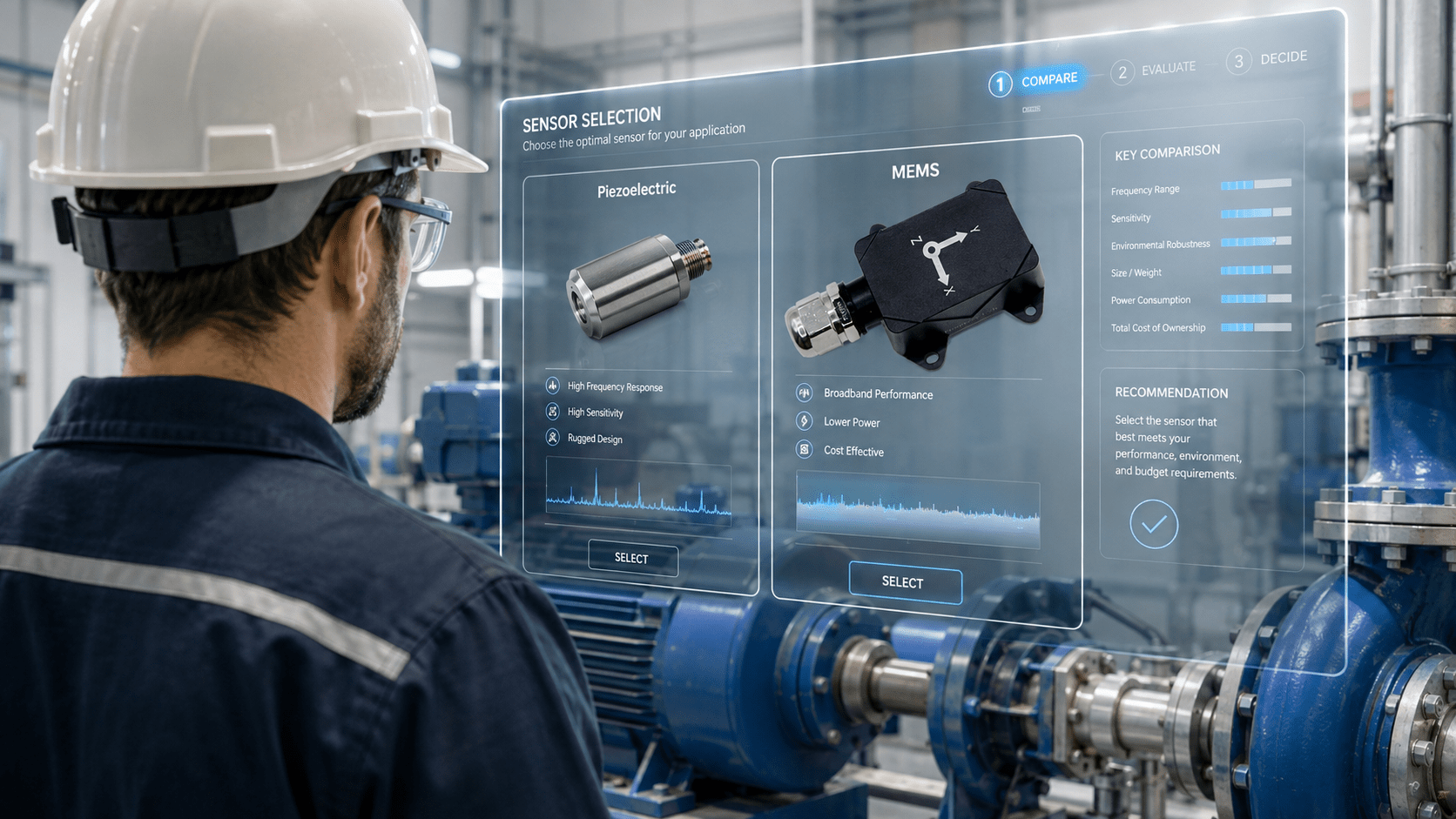
Both Piezoelectric and MEMS sensors excel in vibration measurement, but their ideal industrial applications differ significantly.
Understanding these core differences ensures you deploy a sensor architecture tailored to your operational needs.
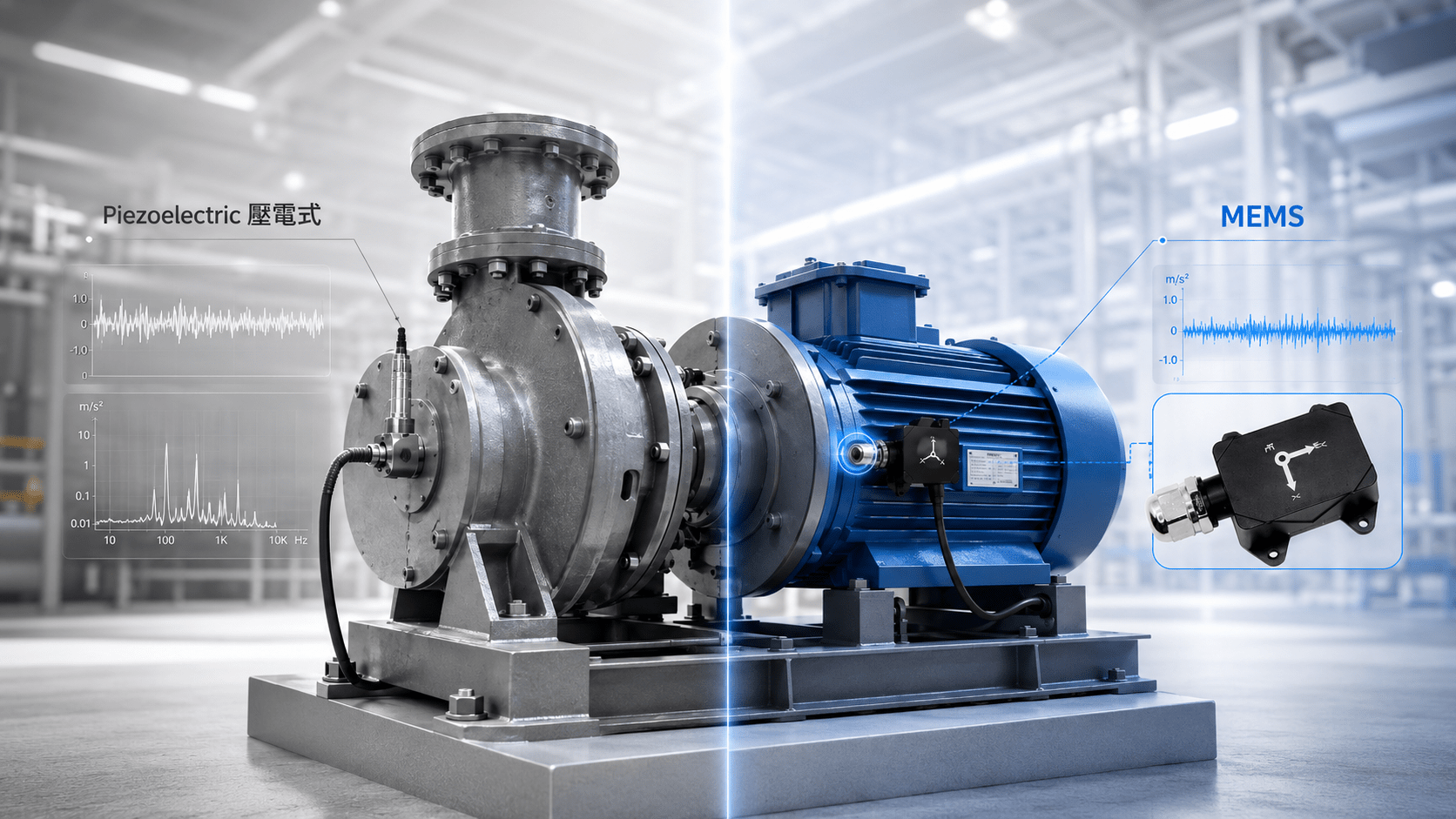
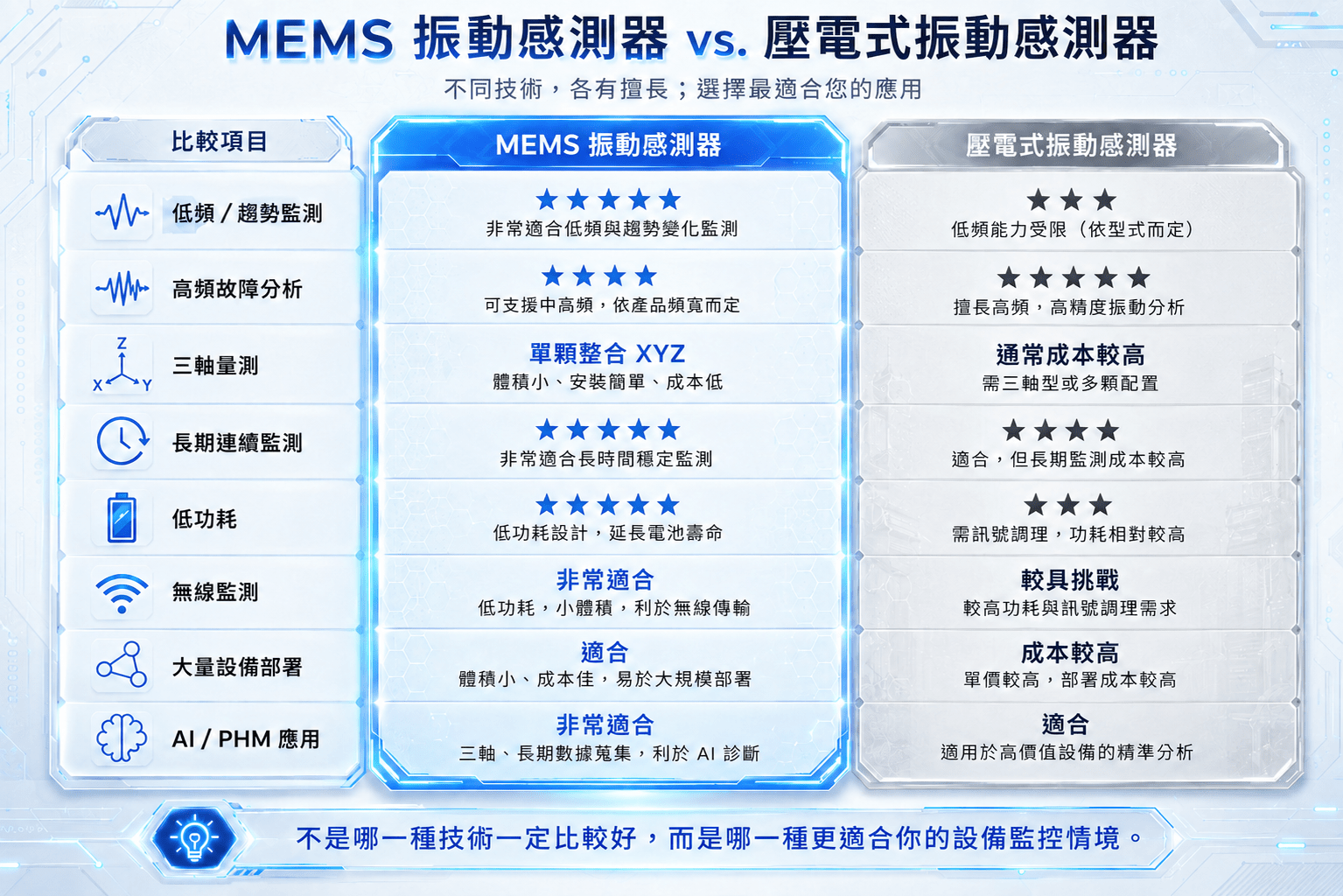
Defining Piezoelectric and MEMS Vibration Sensors
Piezoelectric Sensors Leverage the electrical charge generated by piezoelectric materials under mechanical stress to convert vibration into electrical signals. Renowned for high dynamic range and high-frequency response, they have traditionally dominated dynamic vibration testing and high-speed diagnostic analysis.
MEMS Sensors Measure acceleration by tracking physical deflection on micro-machined silicon structures. Characterized by miniaturization, ultra-low power consumption, and high digital integration, MEMS sensors are purpose-built for high-density deployments, continuous long-term monitoring, and smart Industrial IoT (IIoT) ecosystems.
Piezoelectric sensors dominate in high-frequency dynamic laboratory testing, while MEMS sensors excel in large-scale, continuous, and intelligent industrial asset monitoring.
How to Choose Based on Your Monitoring Strategy
- For High-Frequency Precision Analysis
If your primary focus is single-point high-frequency dynamic analysis or specialized laboratory testing, piezoelectric sensors offer a dedicated advantage.
- For Large-Scale, Plant-Wide Asset Monitoring
If your objective is continuous monitoring across hundreds or thousands of motors, pumps, and fans factory-wide, MEMS sensors offer clear advantages due to their compact footprint, low power draw, and seamless digital integration.
- For Predictive Maintenance (PdM)
The priority shifts beyond raw sensor hardware alone to ensuring a continuous, reliable telemetry stream that integrates directly into centralized monitoring platforms, diagnostic tools, and AI analytics engines.
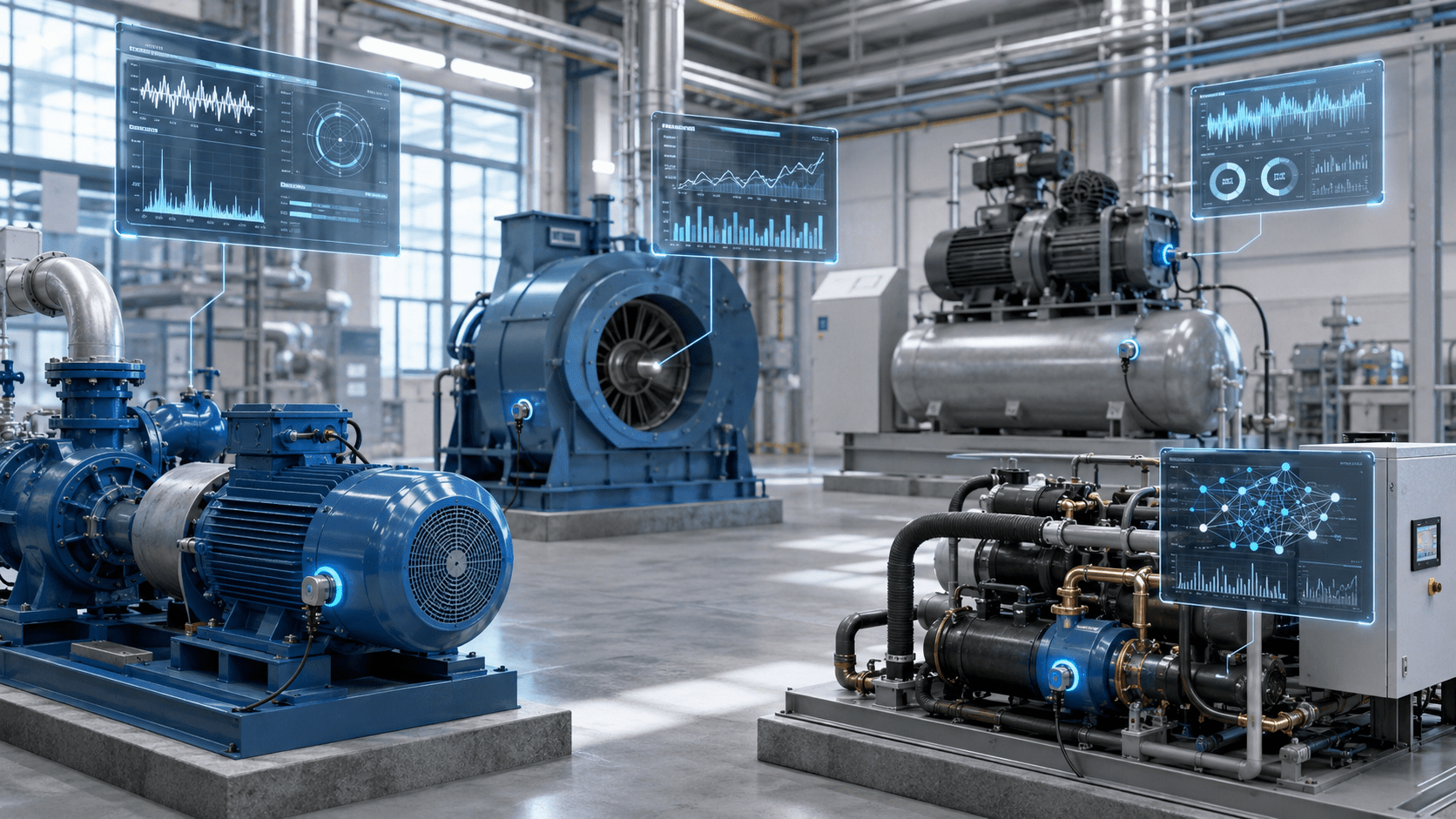
Sensors as Data Gateways for Industrial Intelligence
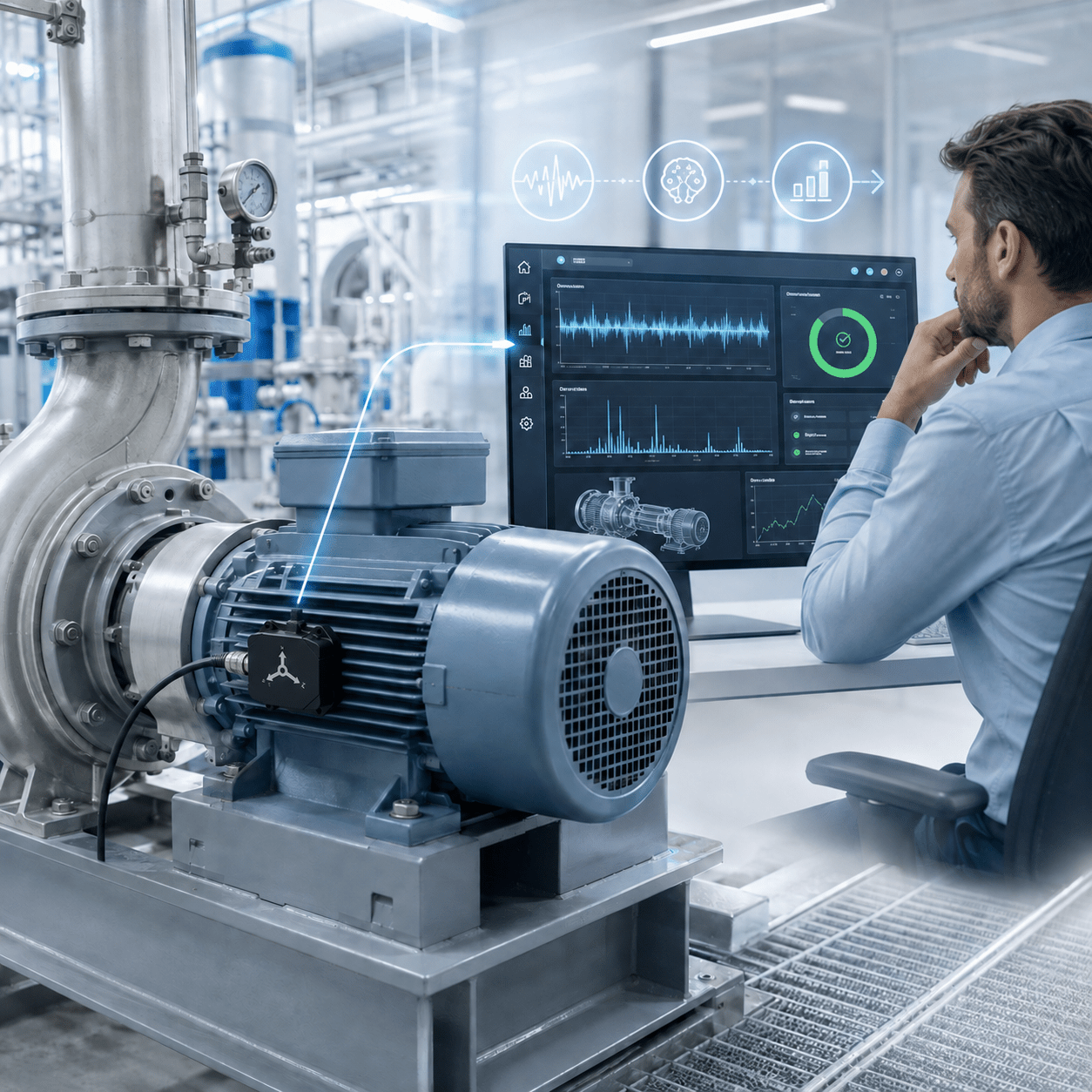
The true value of a vibration sensor extends far beyond capturing raw vibration—it lies in establishing a continuous stream of reliable asset health telemetry. For modern enterprises, effective asset monitoring demands a seamless, end-to-end architecture spanning sensing, data transmission, condition analysis, and AI-driven fault diagnostics. While sensors are responsible for 'seeing' operational changes, the back-end analytics platform empowers enterprises to 'understand' anomalies and 'predict' equipment risks.
Why Prognosis Engineered Smart Vibration Telemetry Around MEMS
For enterprises managing fleet-wide critical assets, sensor deployment must balance measurement accuracy with scalability, rapid installation, protocol compatibility, and long-term operating efficiency.
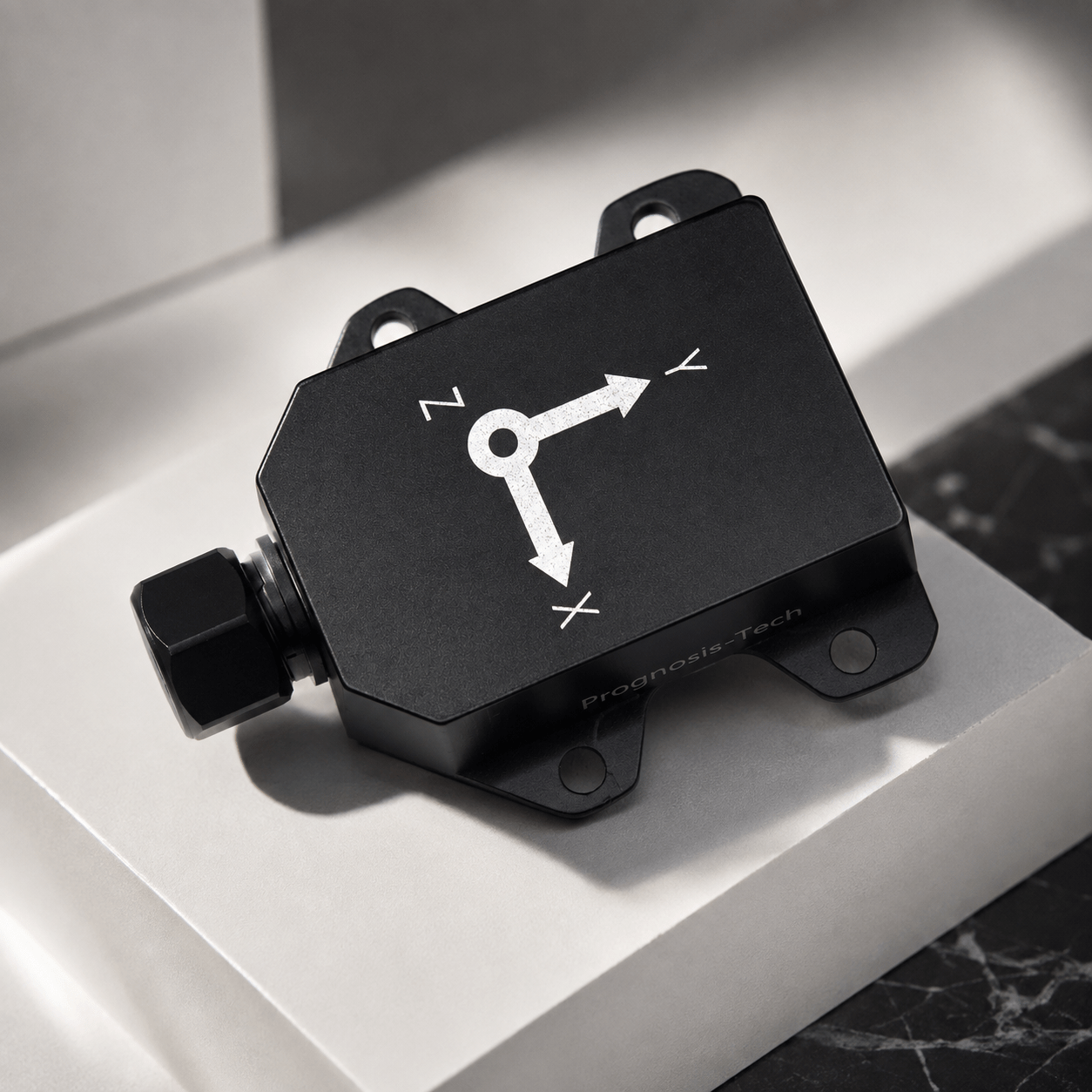
Prognosis centers its industrial sensing framework on MEMS technology—combining tri-axial vibration measurement, edge digital signal processing, and flexible communication protocols to deliver a purpose-built asset health monitoring architecture.
Our sensor portfolio captures simultaneous X, Y, and Z-axis vibration along with temperature telemetry across both wired and wireless deployment modes:
- Tri-Axial Sensing: Captures vibration dynamics across X, Y, and Z spatial planes simultaneously.
- Low-Power Architecture: Engineered for continuous 24/7 operation and long-life wireless deployments.
- Flexible Telemetry Transmission: Adapts seamlessly to diverse site constraints and industrial networks.
- AI-Ready Pipeline: Directly feeds clean, structured data into centralized dashboards and AI diagnostic models.
Define Your Equipment Monitoring Needs Before Selecting a Vibration Sensor
When evaluating vibration sensors, we recommend assessing these core operational criteria: Operating Speed (RPM), Monitoring Frequency Range (Bandwidth), Target Fault Types, Installation Environment, Deployment Scale, Data Transmission Method.
If your goal extends beyond one-off measurements to building a continuous asset health monitoring and Predictive Maintenance (PdM) framework, seamless integration between the sensor, back-end monitoring platforms, and AI diagnostic engines becomes essential.