
The Choice for Uninterrupted Smart Warehousing
Shift maintenance from reactive firefighting to proactive prevention. Deploy AI-driven fault diagnostic solutions to keep your AS/RS equipment running smoothly and reliably.
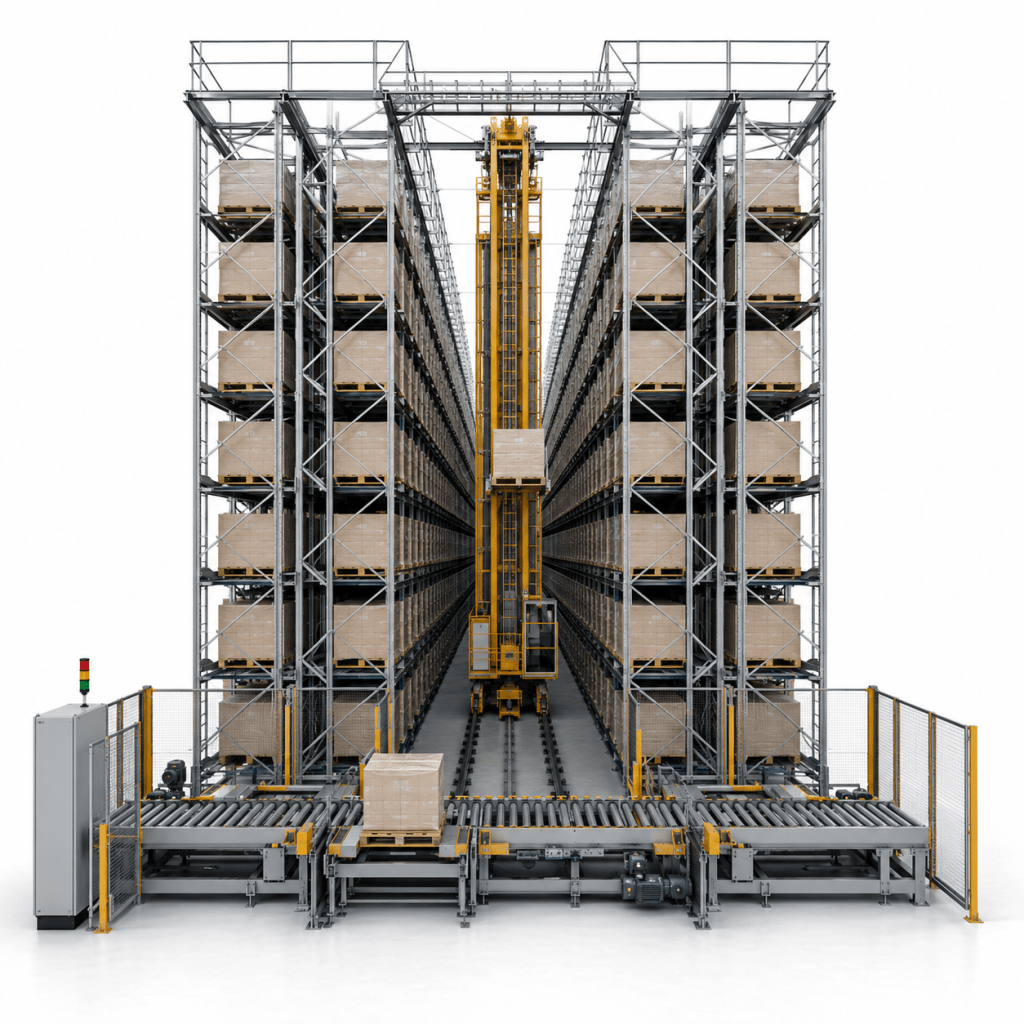
Are Your Automated Storage Systems Facing These Challenges?
When a single machine trips, the entire material handling flow freezes.
Hidden Component Degradation
Wear on critical parts accumulates quietly—anomalies are often discovered only after catastrophic breakdown occurs.
Logistics & Production Interruption
When stacker cranes or automated lifters fail, material handling grinds to a halt, crippling overall plant throughput.
Inefficient Manual Inspections
Periodic physical walkthroughs and reliance on technician intuition fail to catch early-stage defects in time.
High Emergency Repair Costs
Fixing machinery post-failure spikes labor expenses, drives up emergency spare-part costs, and threatens delivery deadlines.
Data Blind Spots
Without quantifiable health metrics, maintenance teams are forced to make decisions based on guesswork and tribal knowledge.
Why Traditional Maintenance Fails to Prevent Outages
In automated warehouse equipment (such as stacker cranes and transfer cars), mechanical failures rarely happen instantaneously. Instead, they build up gradually over time—starting as minor bearing wear, loose drive assemblies, or subtle vibration anomalies.
Relying solely on periodic manual inspections or calendar-based maintenance schedules often leads to missed windows of opportunity, leaving teams to fix machinery only after it shuts down.
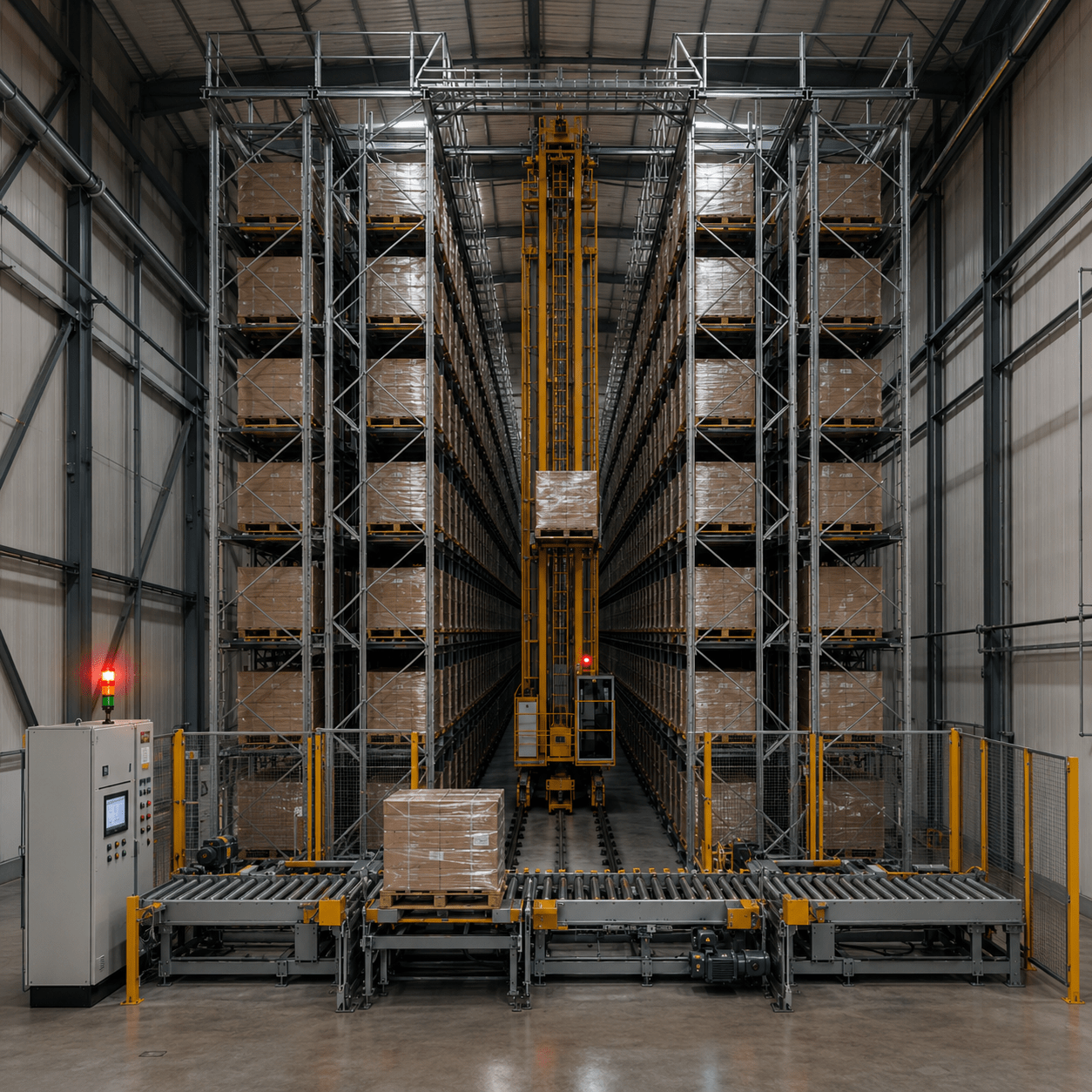
Gaining actionable visibility into machine health before failure strikes is the key to elevating logistics efficiency and equipment reliability.
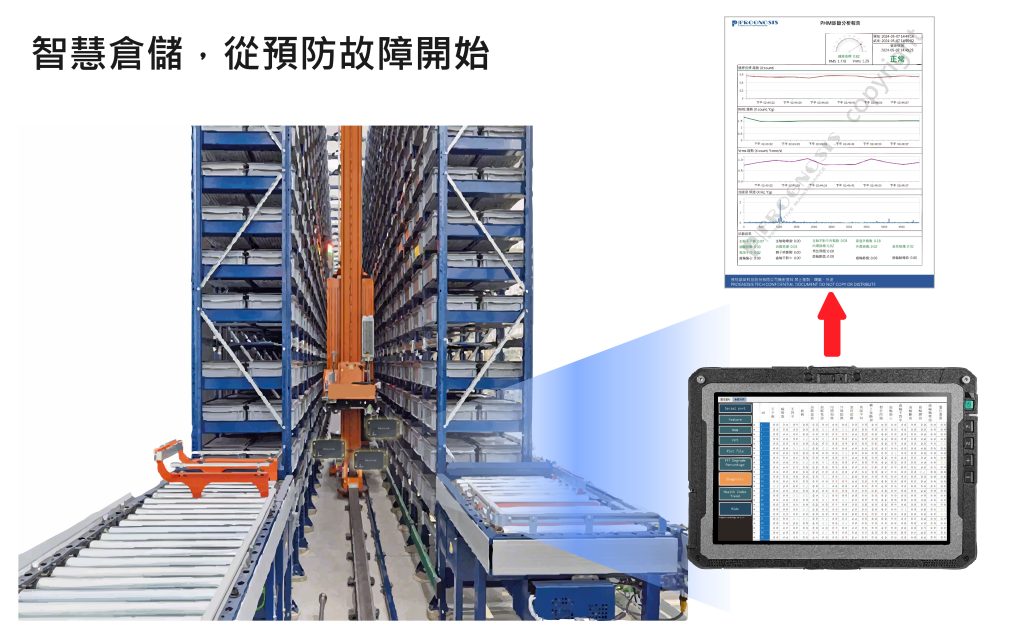
Deploy PHM to Elevate Automated Warehouse Reliability
Implementing Prognosis PHM enables continuous tracking of core components, including motors, gearboxes, and bearings. By combining precision vibration monitoring with AI fault diagnostic algorithms, the system identifies early anomaly trends—allowing maintenance teams to schedule targeted servicing long before failure occurs. This effectively minimizes unplanned downtime risks and secures uninterrupted AS/RS operations.
Evolving from Scheduled Servicing to Predictive Maintenance
By continuously accumulating and analyzing machine health data, enterprises can transition from rigid calendar-based servicing to Predictive Maintenance (PdM). Maintenance strategies become condition-driven, eliminating unnecessary teardowns and premature part replacements. This approach extends equipment lifespans, maximizes uptime (OEE), and ensures a smoother, more efficient warehouse workflow—strengthening overall operational resilience and supply chain agility.