
Predictive Maintenance (PdM) Selection Guide
Master 5 Key Evaluation Indicators to Eliminate Unplanned Downtime
Before choosing a Predictive Maintenance (PdM) system, clarify your equipment characteristics and operational requirements.
Selecting the right PdM solution extends beyond comparing sensor counts or software features—it requires verifying that the framework aligns with your asset dynamics, diagnostic objectives, and field maintenance workflows.
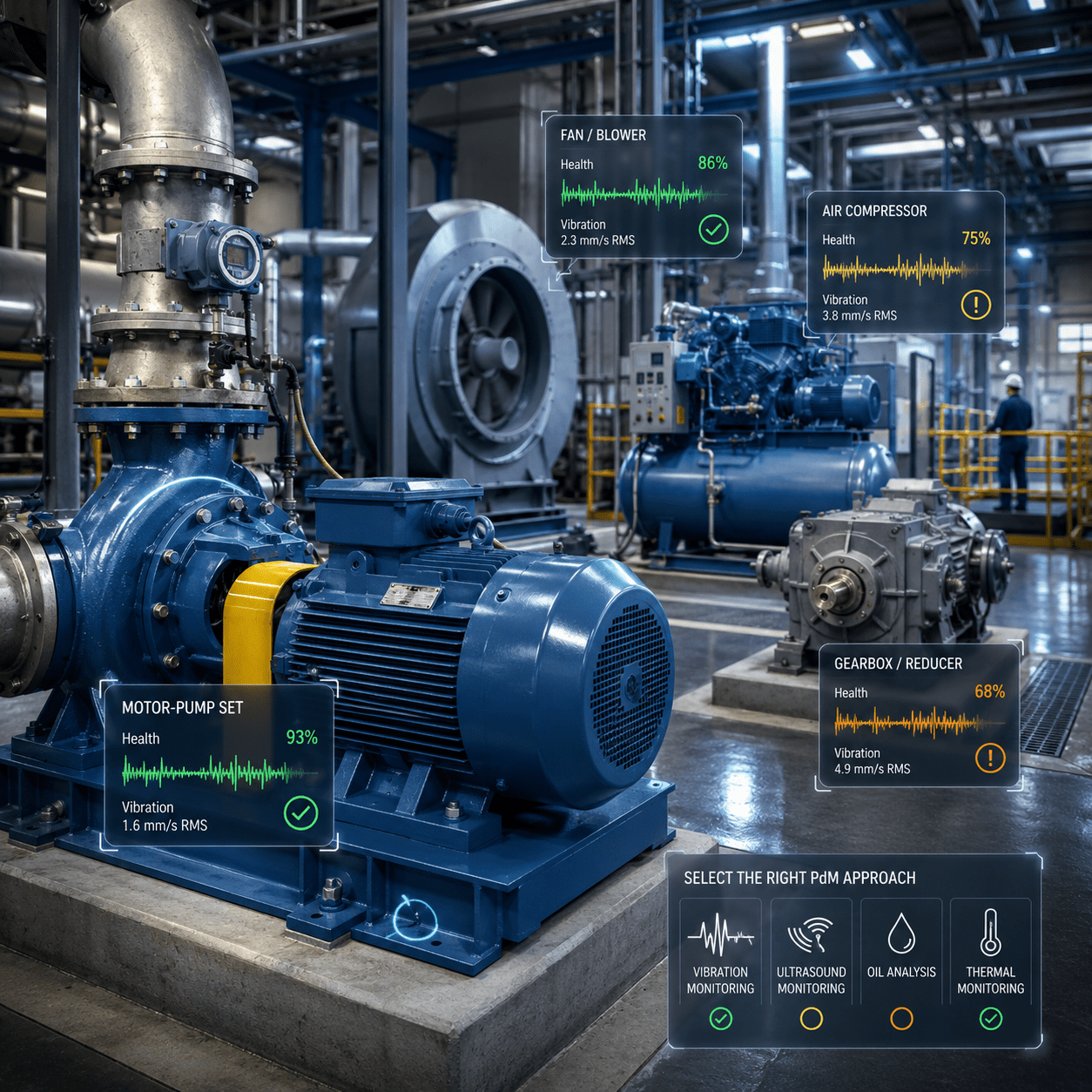
Rotating assets—such as motors, pumps, fans, compressors, and gearboxes—exhibit distinct operating speeds, failure modes, and installation environments.
Evaluating these core factors upfront ensures your investment yields immediate ROI.
Define Asset Kinematics & Diagnostic Goals First
Target failure modes vary by machine type. Your PdM strategy should start with "what problem are we solving?" rather than focusing on brands or sensor hardware.
For example:
-
- Motors: Bearing degradation, rotor imbalance, shaft misalignment
- Pumps: Bearing wear, coupling issues, hydraulic/rotational anomalies
- Fans: Bearing defects, impeller imbalance, blade degradation
- Gearboxes: Gear tooth wear, bearing damage, meshing anomalies
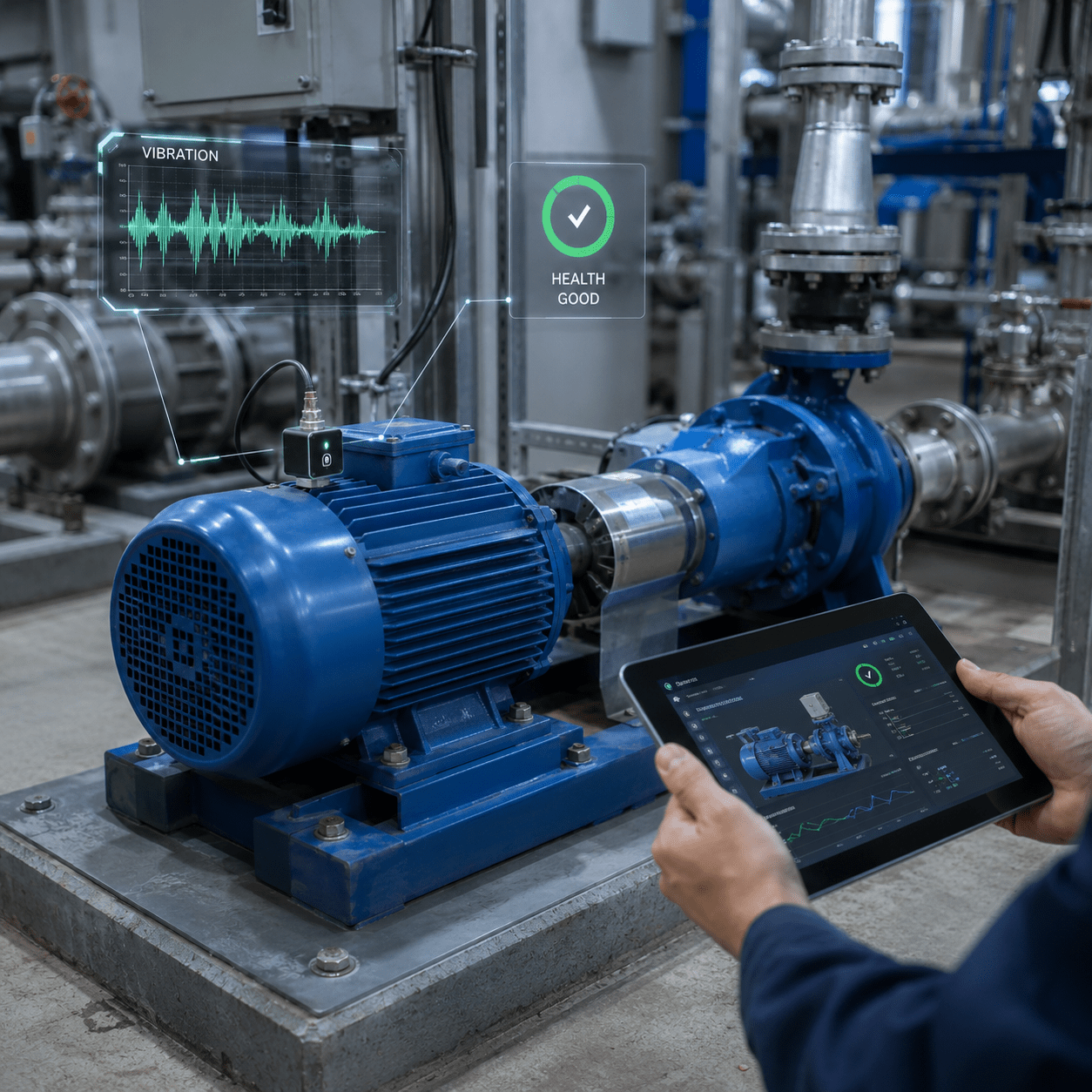
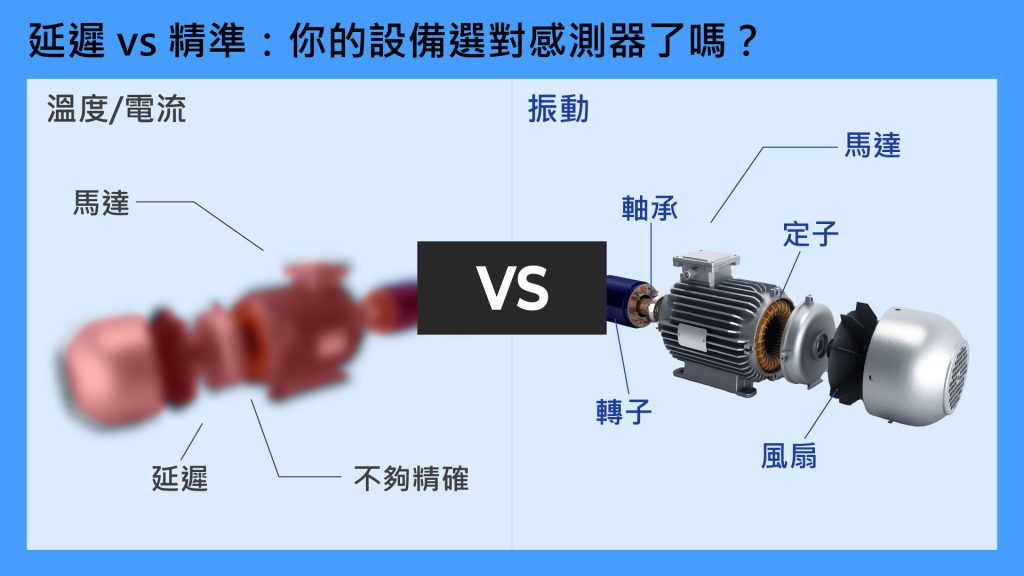
If your primary objective is tracking mechanical degradation in rotating machinery, vibration telemetry serves as the most effective diagnostic signal.
Assess Sensor Capabilities & Data Quality
Sensors act as the primary data gateway for any PdM architecture. Their measurement capabilities, mounting methods, and raw signal quality directly govern downstream analytics.
Key Checklist:
-
- Alignment with machine vibration dynamics and frequency range
- Optimal mounting access and physical installation constraints
- Necessity of single-axis vs. tri-axial measurement
- Compatibility between data transmission protocols and site architecture
- Scalability for future facility expansions
In practice, optimal sensor specifications must align with specific asset dynamics and targeted failure modes, rather than evaluating hardware solely on raw specification sheets.
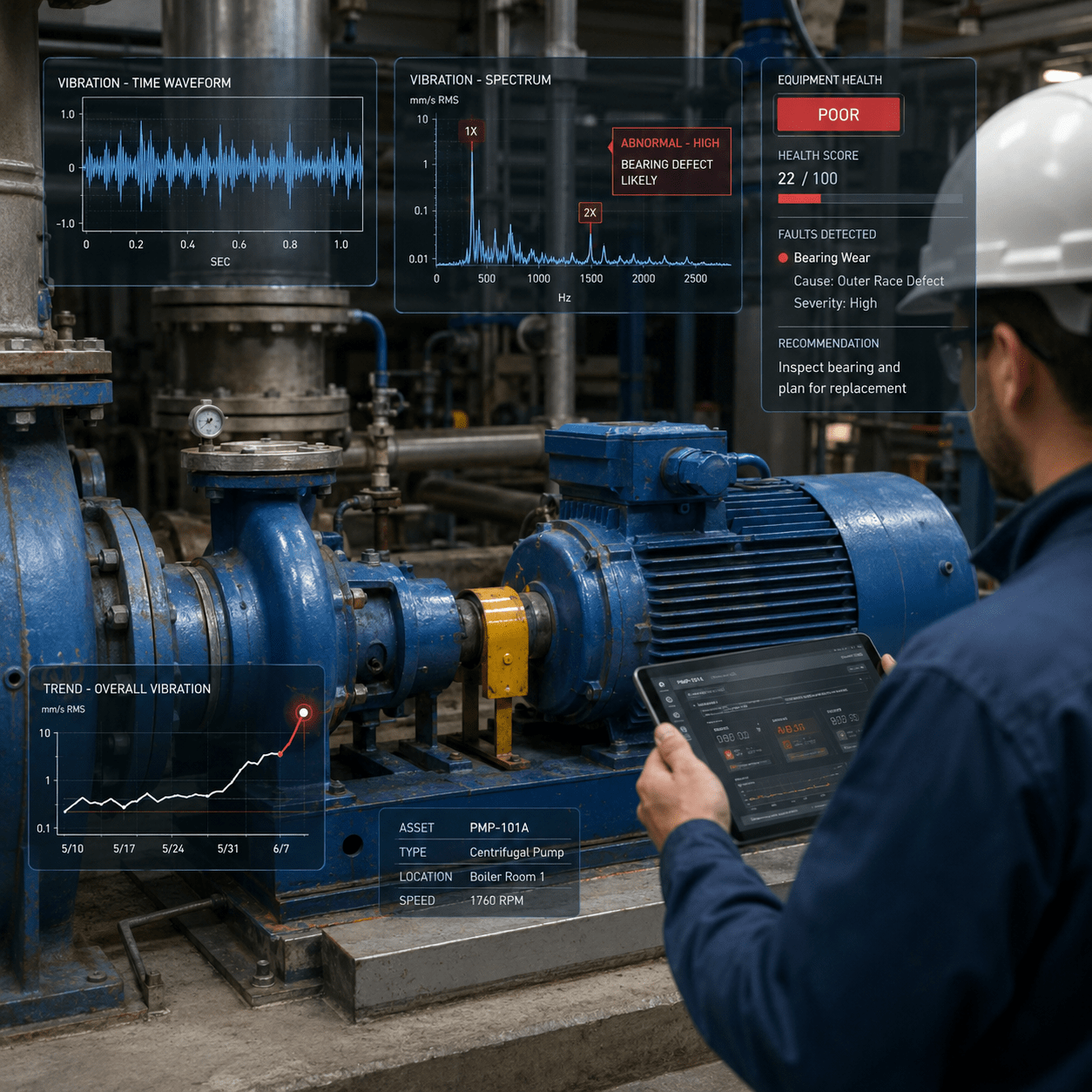
Move from Anomaly Detection to Root-Cause Fault Diagnosis
Basic PdM tools merely alert you that "an anomaly exists." Maintenance technicians need to know:
Where is the defect? What is causing it? How severe is it?
Ensure your target solution delivers:
-
- Real-Time Anomaly Detection
- Automated Fault Classification
- FFT & High-Frequency Spectral Analysis
- Quantified Asset Health Index
- Long-Term Trend Analytics
- Automated Reporting
A system that only flags vague warnings without diagnostic context adds to technicians' workloads rather than lightening them.
Prioritize Actionable & Intuitive User Insights
The end users of a PdM platform are facility managers, field engineers, and maintenance technicians—not data scientists.
The software should convert complex signal data into clear operational directives.
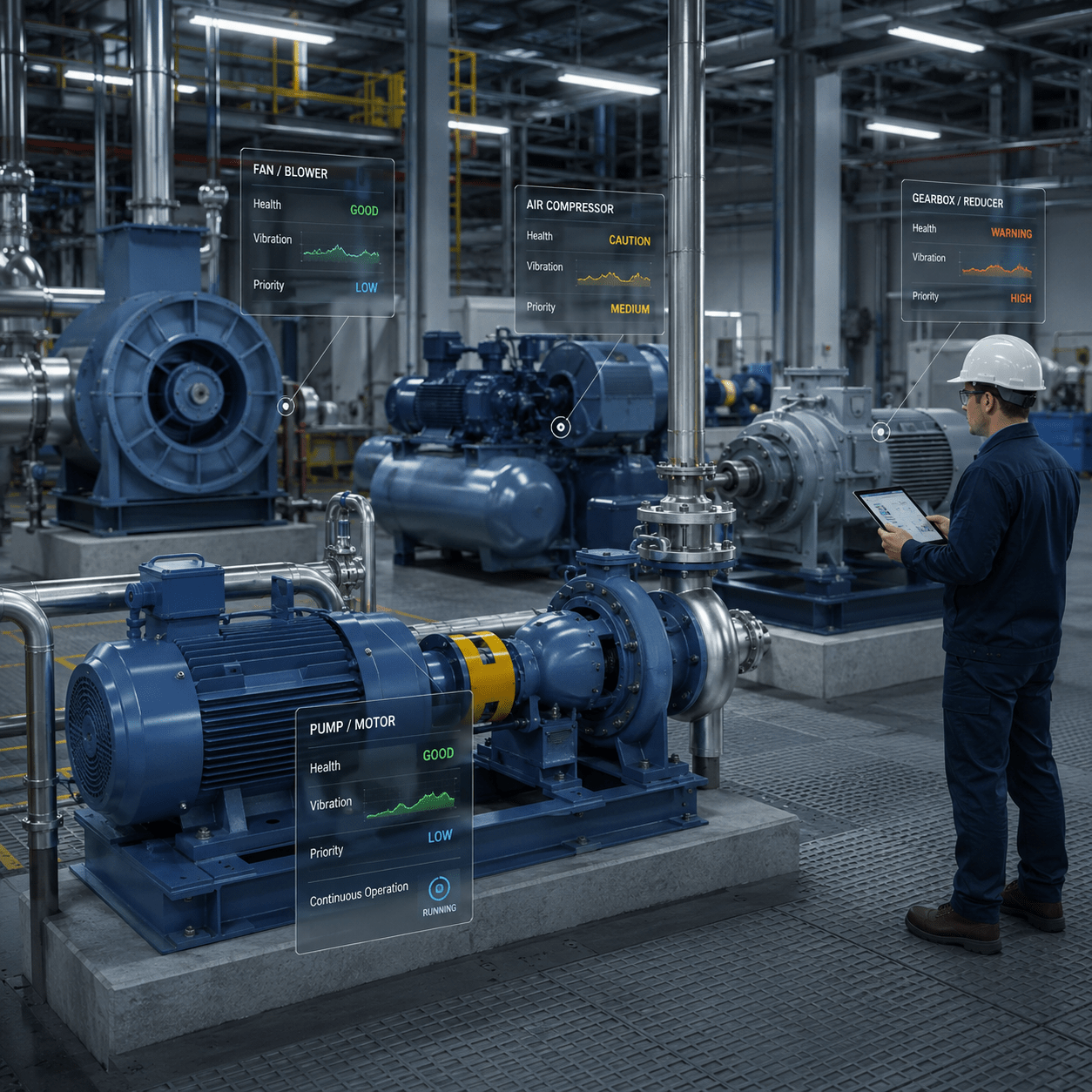
A robust PdM platform simplifies asset status into an intuitive Health Index:
-
- 🟢 Normal (Healthy): Stable operation. Maintain routine operating schedules.
- 🟡 Notice (Minor Anomaly): Slight baseline drift detected. Non-critical; schedule inspection during the next routine maintenance window.
- 🟠 Warning (Moderate Wear): Pronounced anomaly indicating localized mechanical wear. Recommend scheduling targeted inspection soon.
- 🔴 Danger (Critical Fault): Severe mechanical defect with high vibration energy. Stop machinery and inspect immediately!

Verify Deployment Flexibility & Scalability
Enterprise PdM rollouts rarely cover an entire plant overnight. Successful deployments start with high-value critical assets and scale progressively.
Scalability Factors to Evaluate:
- Ease of sensor installation and commissioning
- Compatibility with existing industrial IT/OT networks
- Centralized multi-asset management dashboard
- Seamless onboarding for additional assets over time
- Flexible deployment options (On-Premises, Private Cloud, SaaS)
A great PdM solution isn't just about successful deployment today; it must be engineered to expand progressively as your business grows.
Look Beyond Hardware Costs When Evaluating a PdM System
The true cost of a Predictive Maintenance (PdM) system extends far beyond the unit price of individual sensors.
A realistic implementation budget accounts for the entire end-to-end architecture:
Sensors → Connectivity → Data Platform →Analytics Software→ AI Diagnostics → Deployment → Technical Support
Focusing solely on initial hardware prices while overlooking downstream data analytics, system integration, and operational demands often leaves engineering teams burdened with manual data interpretation after deployment.
When evaluating a PdM solution, the most critical metric is whether the overall system truly alleviates your maintenance team's daily workload.
3 Strategic PdM Implementation Options
- Option 1: Single-Machine Pilot
Deploy telemetry on a single high-impact machine to validate diagnostic accuracy and ROI.
Best for: Organizations deploying PdM for the first time.
- Option 2: Critical Asset Group Monitoring
Expand monitoring across an entire production line or fleet of key assets.
Best for: Enterprises seeking to prove scalable operational savings.
- Option 3: Plant-Wide Enterprise Management
Establish a fully integrated asset health infrastructure across all plant operations.
Best for: Facilities with mature digital transformation roadmaps.
An enterprise-wide rollout isn't necessary right out of the gate. Starting with high-value, high-risk critical assets makes it significantly easier to validate tangible ROI and prove operational value.

How Prognosis Accelerates Your PdM Strategy
Prognosis Technology delivers an end-to-end PdM architecture integrating MEMS vibration telemetry, AI diagnostic algorithms, and asset health management software. We translate complex machine signals into actionable diagnostic insights—empowering maintenance teams to make confident, proactive decisions.
From MEMS vibration sensors to AI fault diagnostics and asset health management—building a complete predictive maintenance architecture for industrial machinery.
Unsure Which PdM Strategy Fits Your Facility?
Implementation roadmaps vary based on asset counts, kinematic profiles, operating environments, and maintenance workflows.
Contact our technical experts with your asset details to receive a tailored PdM feasibility assessment and deployment proposal.