
What Is Equipment Vibration?
A Complete Guide from Telemetry to Predictive Maintenance
In modern, highly automated production lines striving for zero unplanned downtime, asset stability and equipment lifespan are core drivers of operational productivity.
Vibration is one of the most immediate and valuable metrics for evaluating asset health.
Through continuous vibration telemetry and spectral analysis, enterprises can forecast machine anomalies, refine servicing strategies, and drastically minimize operational risk and overhead.
Why Does Vibration Reflect Equipment Health?
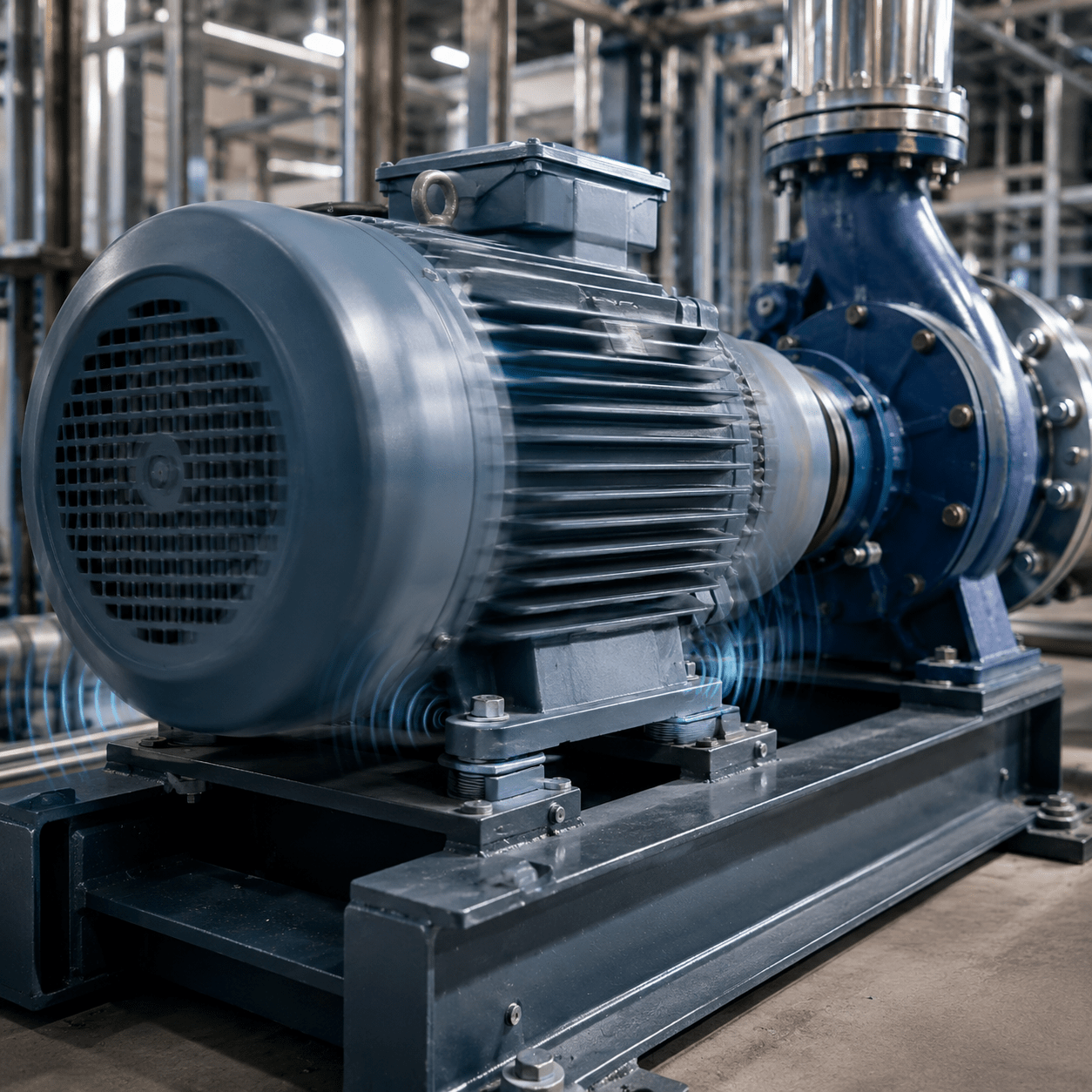
Rotating machinery—such as motors, pumps, fans, compressors, and gearboxes—generates a distinct baseline vibration during normal operation.
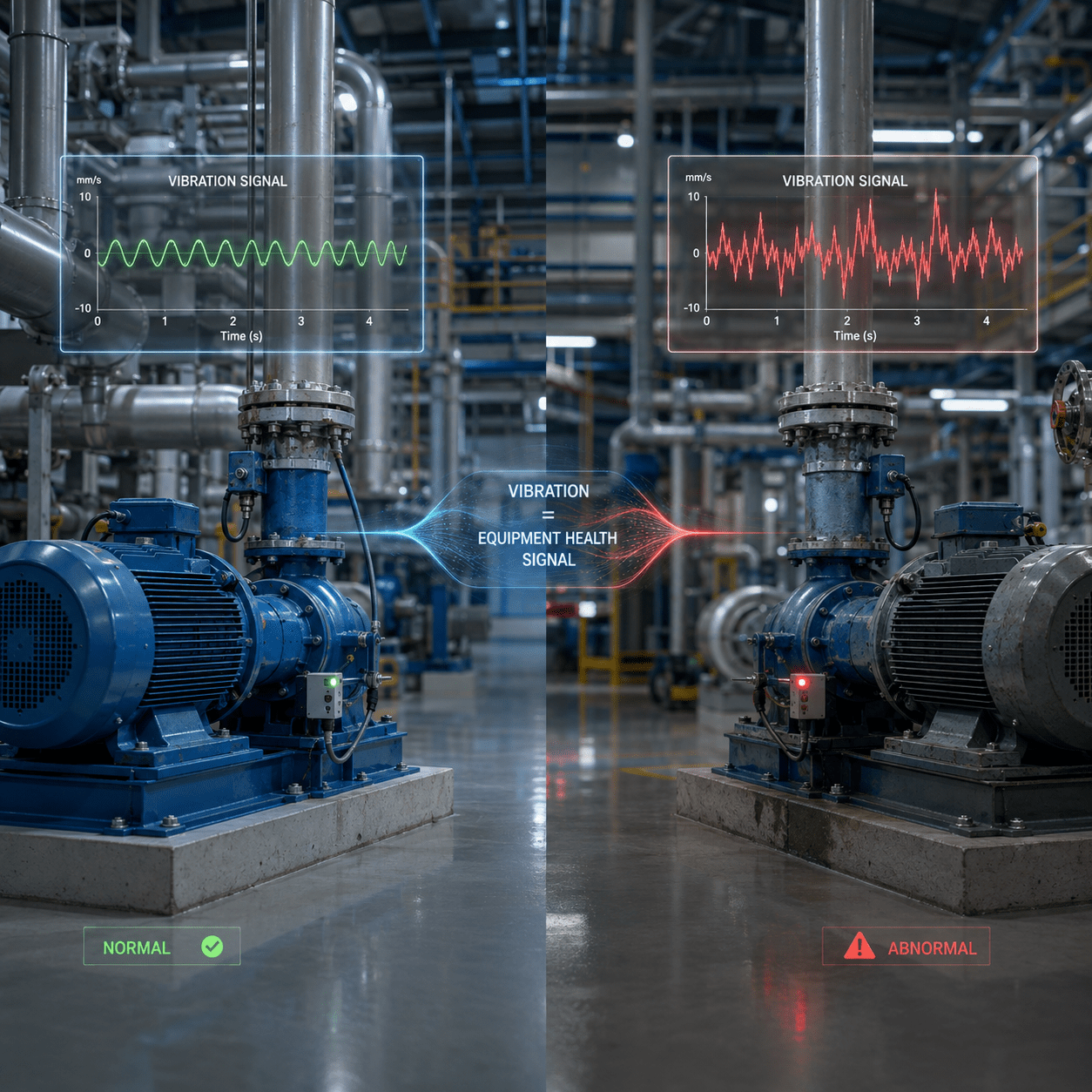
When mechanical components experience wear, looseness, imbalance, misalignment, or bearing degradation, the vibration amplitude, frequency, and spectral patterns shift accordingly.
Vibration is far more than operational noise; it is actionable health data.
By continuously harvesting operational signals via vibration sensors and applying diagnostic algorithms, facilities transition from reactive breakdown repairs to proactive anomaly detection and scheduled maintenance.
What Is Equipment Vibration?
Equipment vibration refers to the periodic or non-periodic mechanical motion generated during machinery operation.
In rotating assets such as motors, pumps, and fans, moving components produce distinct vibration signatures. Under healthy conditions, these signatures remain relatively baseline-stable; however, as internal component anomalies develop, the vibration profile undergoes measurable shifts.
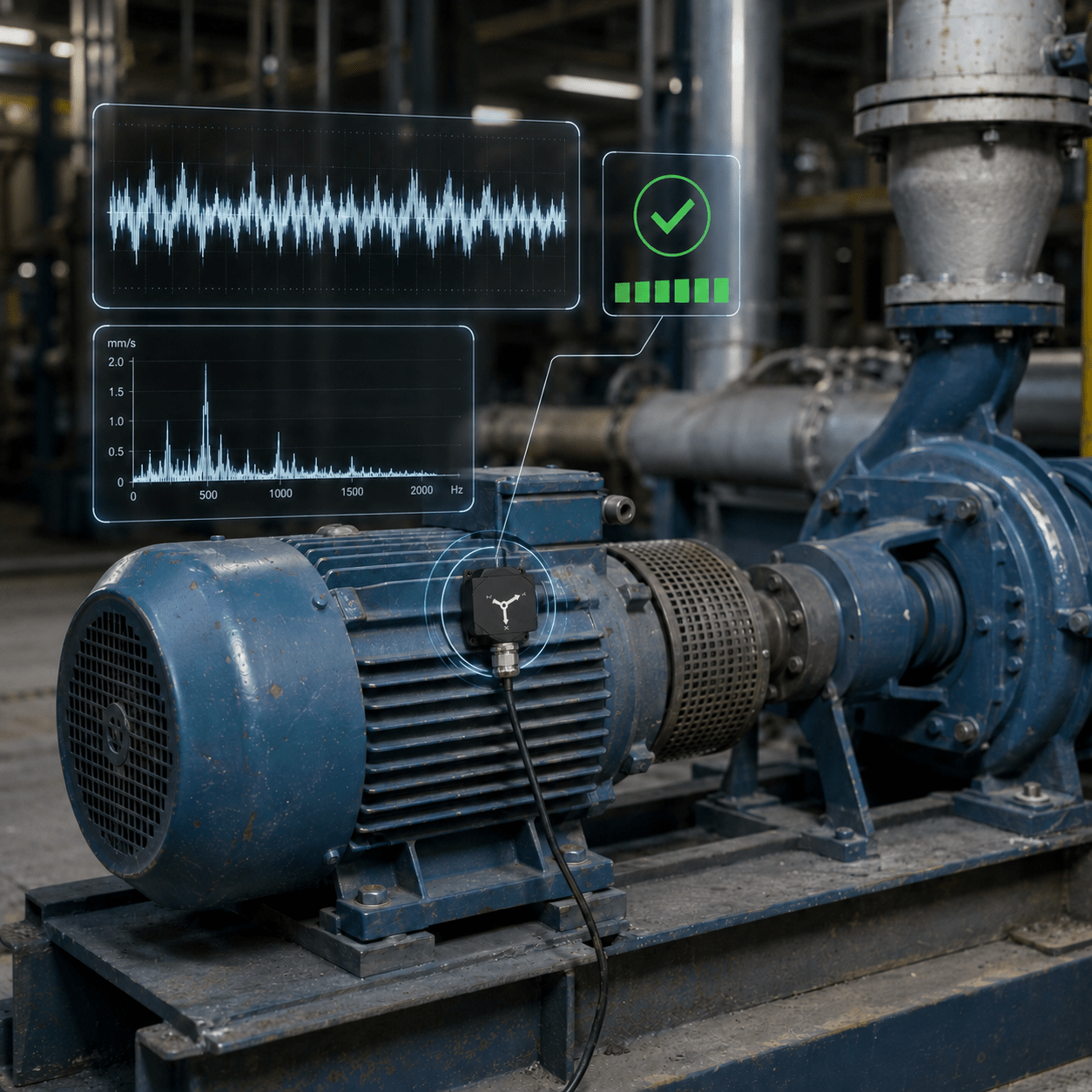
Core metrics in condition monitoring include vibration displacement, vibration velocity, and vibration acceleration. These metrics are further evaluated through time-domain or frequency-domain analysis to deliver deep visibility into asset health.
What Causes Abnormal Vibration?
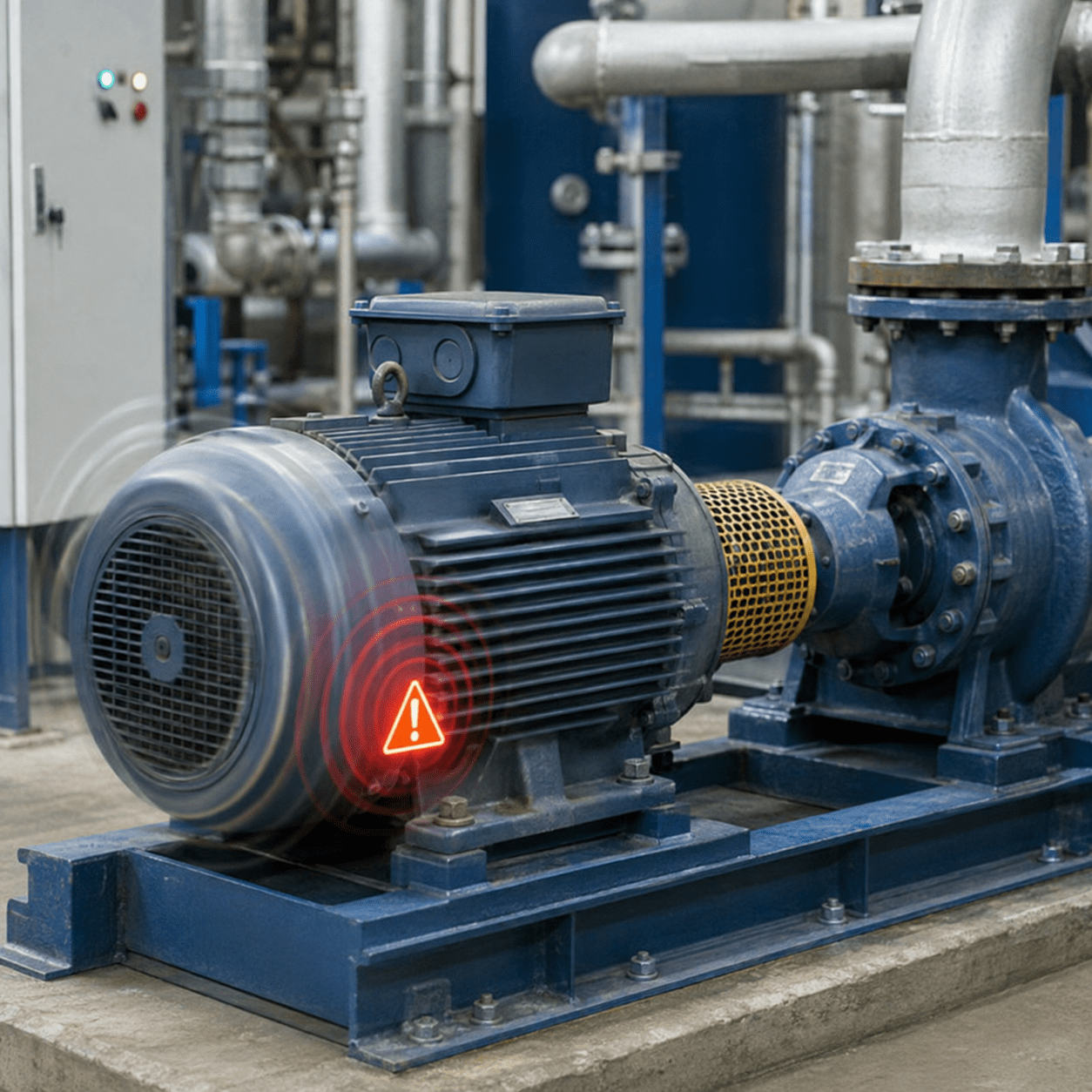
Equipment naturally generates vibration during operation due to rotational or reciprocating motion. However, abnormal shifts in vibration frequency, amplitude, or spectral patterns are often the earliest warning signs of impending mechanical failure當振動頻率、幅度或模式異常變化時,往往是設備故障的早期徵兆。
Common Causes of Abnormal Vibration:
- Bearing Wear or Damage
- Mechanical Imbalance
- Shaft Misalignment
- Gear Defects
- Structural Looseness

Unlocking the Machine Health Code: 3 Major Operational Transformations
- Maximize Equipment Reliability
Gain real-time visibility into machine health to drive Condition-Based Maintenance (CBM)—intervening at the precise moment before failure strikes.
- Extend Asset Lifespan
Excessive vibration accelerates metal fatigue and bearing destruction. Tracking long-term vibration trends mitigates component wear and maximizes total asset lifecycle value.
- Drastically Cut Maintenance & Downtime Costs
Unplanned outages trigger catastrophic repair bills and lost production yield. Reports by the U.S. Department of Energy (DOE) and McKinsey highlight that organizations implementing predictive maintenance reduce maintenance and downtime costs by ~30% while significantly cutting failure rates.
4 Steps to Kickstart Your Vibration Monitoring Journey
Step 1 | Identify Critical Assets
Prioritize high-value or high-impact machinery that directly affects line throughput (e.g., core motors, primary pumps, utility fans, compressors).
Step 2|Deploy Vibration Telemetry
Install industrial-grade vibration sensors at optimal measurement points based on asset kinematics to capture continuous operational data.
Step 3 | Analyze Asset Condition
Evaluate health status using vibration trends, spectral signatures, and time-domain features.
Step 4 | Actionable Early Warnings & Maintenance
When anomaly trends emerge, alert maintenance personnel immediately to schedule targeted servicing based on actual machine health.
During actual deployment, sensor selection, mounting locations, and analytical methods must all be evaluated based on the unique operational characteristics of each asset.


Vibration Monitoring Is More Than Just Installing Sensors
Sensors provide raw telemetry, but realizing true predictive maintenance requires an integrated workflow:
因此,一套完整的振動監測系統通常包含:
Sensing ➔ Data Harvesting ➔ Analysis ➔ Diagnostics ➔ Alerting ➔ Condition-Based Servicing
If you only collect raw numbers, technicians must still spend valuable time interpreting figures manually. Modern vibration analytics and AI diagnostics convert raw data into intuitive, actionable asset health insights.
How Prognosis Accelerates Your Vibration Monitoring Roadmap
Prognosis Technology delivers an end-to-end framework spanning MEMS vibration sensing, data logging, AI fault diagnostics, and predictive maintenance software.
By pairing industrial MEMS telemetry with automated AI health scoring, we empower facilities to transition away from manual walkthroughs and reactive firefighting toward continuous, automated condition monitoring.
Whether for semiconductor fabs, high-tech manufacturing, or traditional industrial environments, Prognos customizes architecture and monitoring strategies tailored to your site-specific demands.